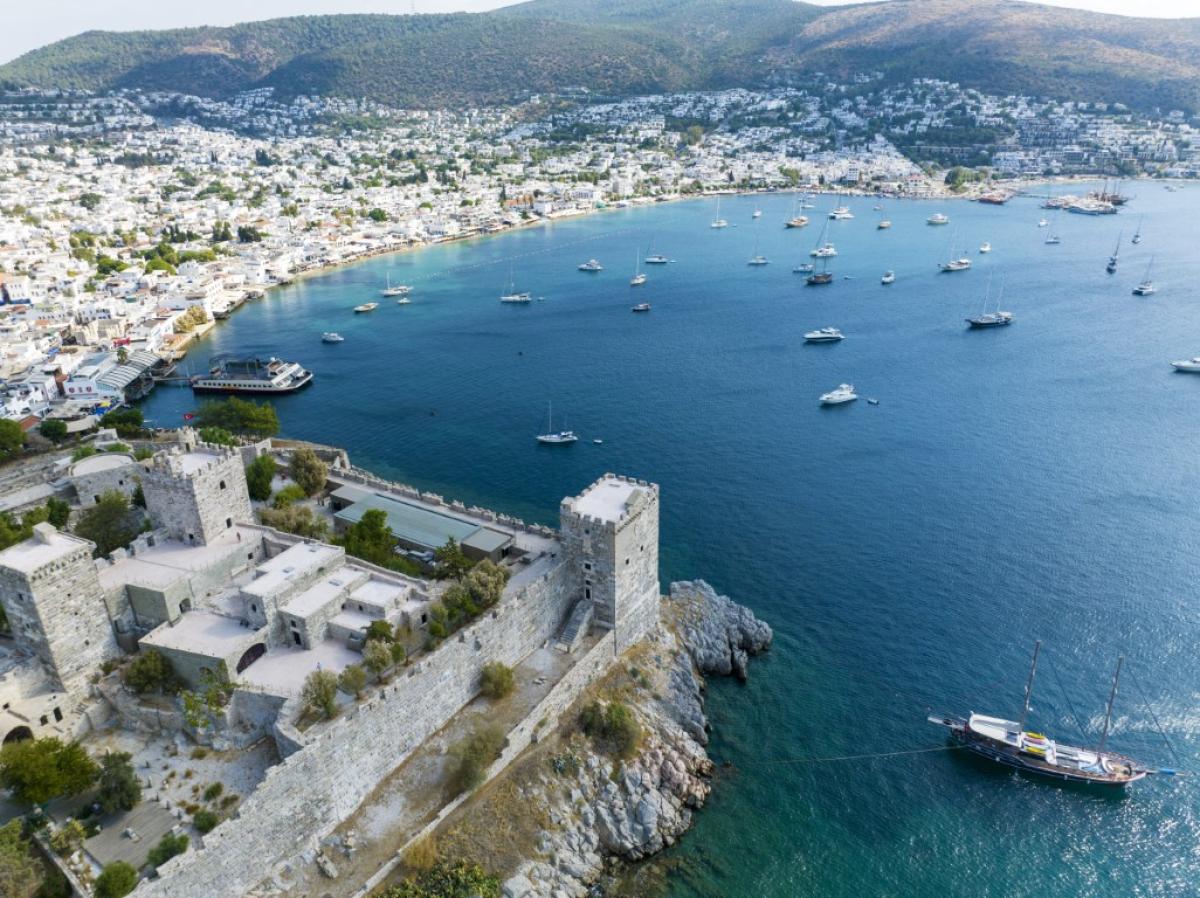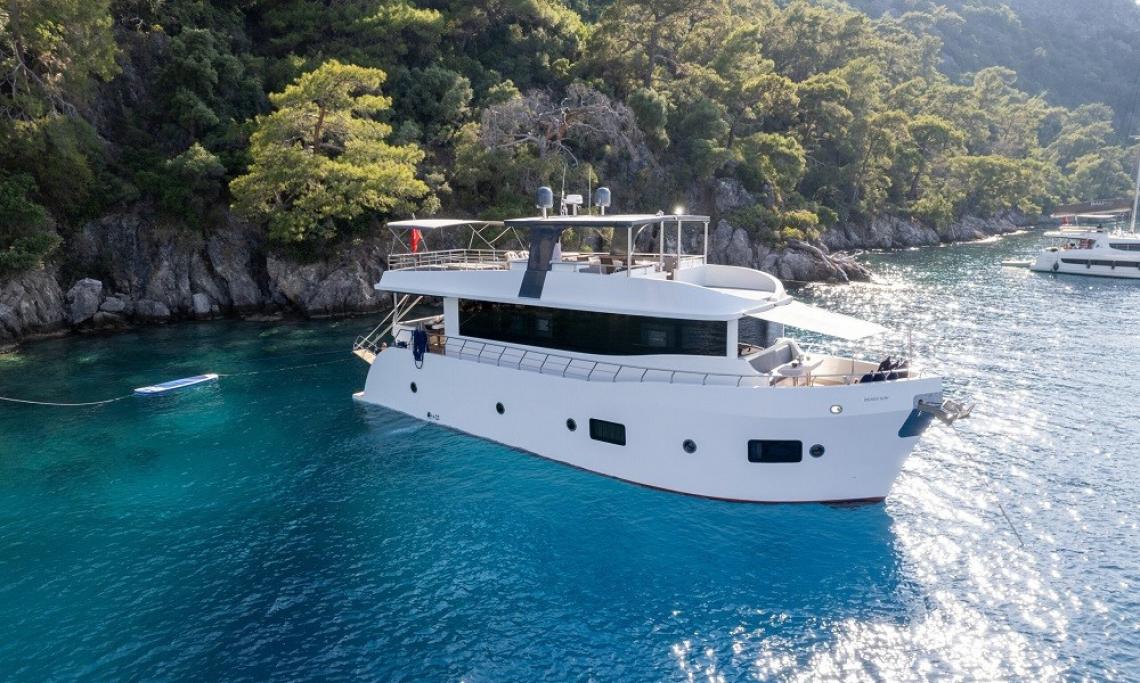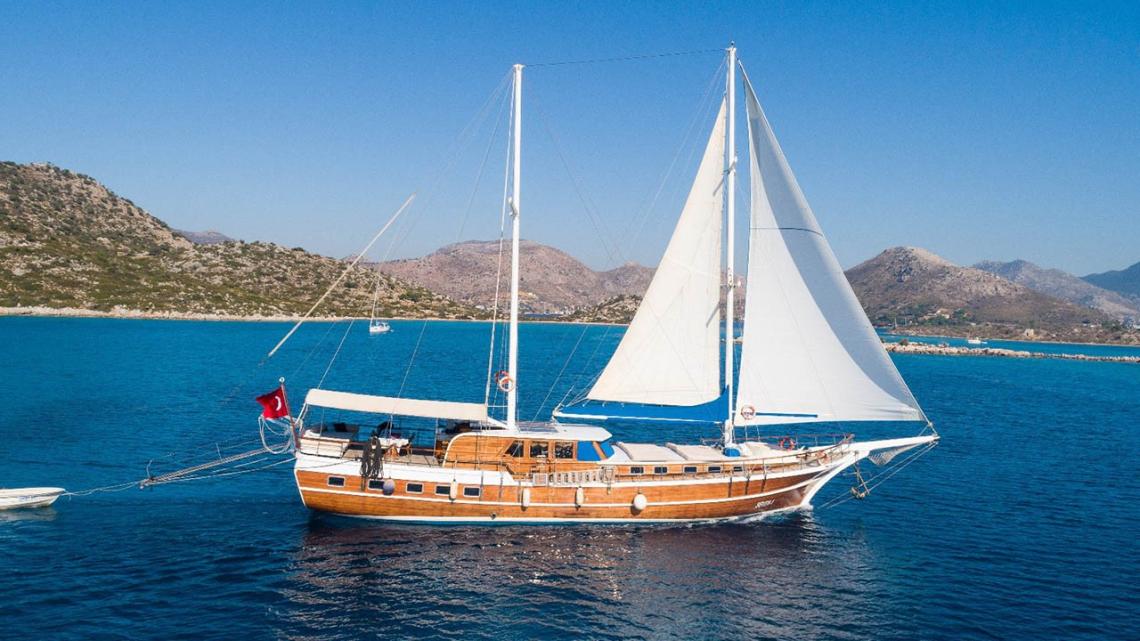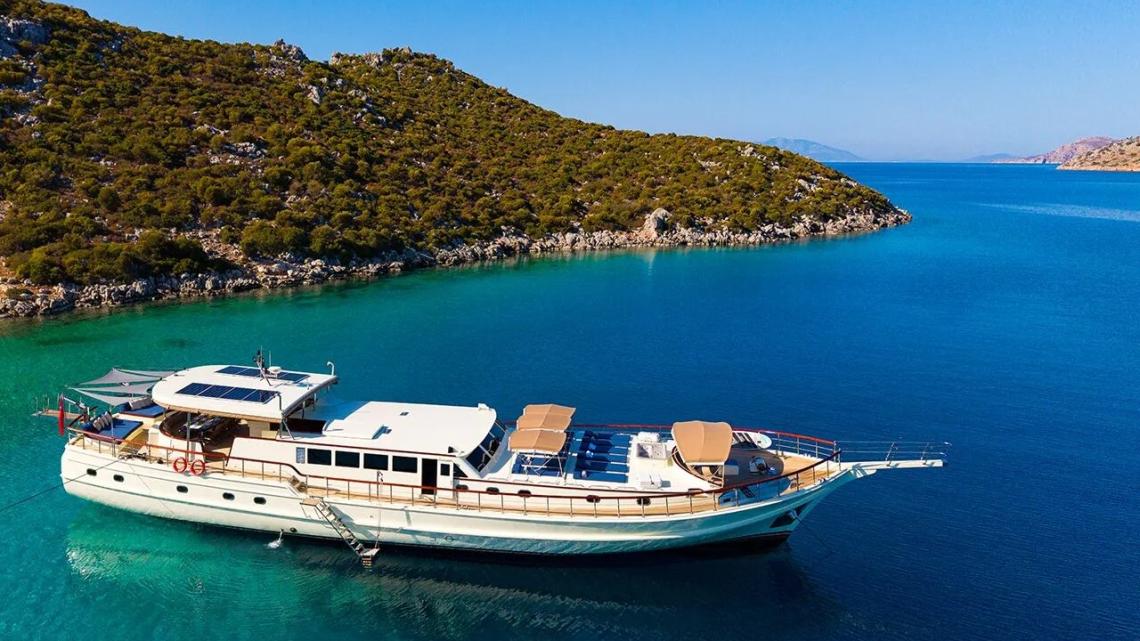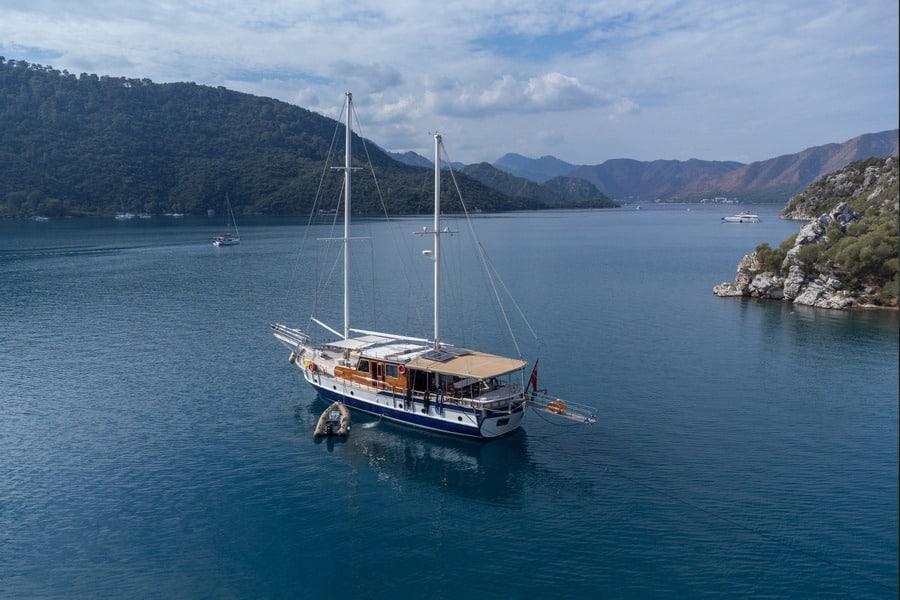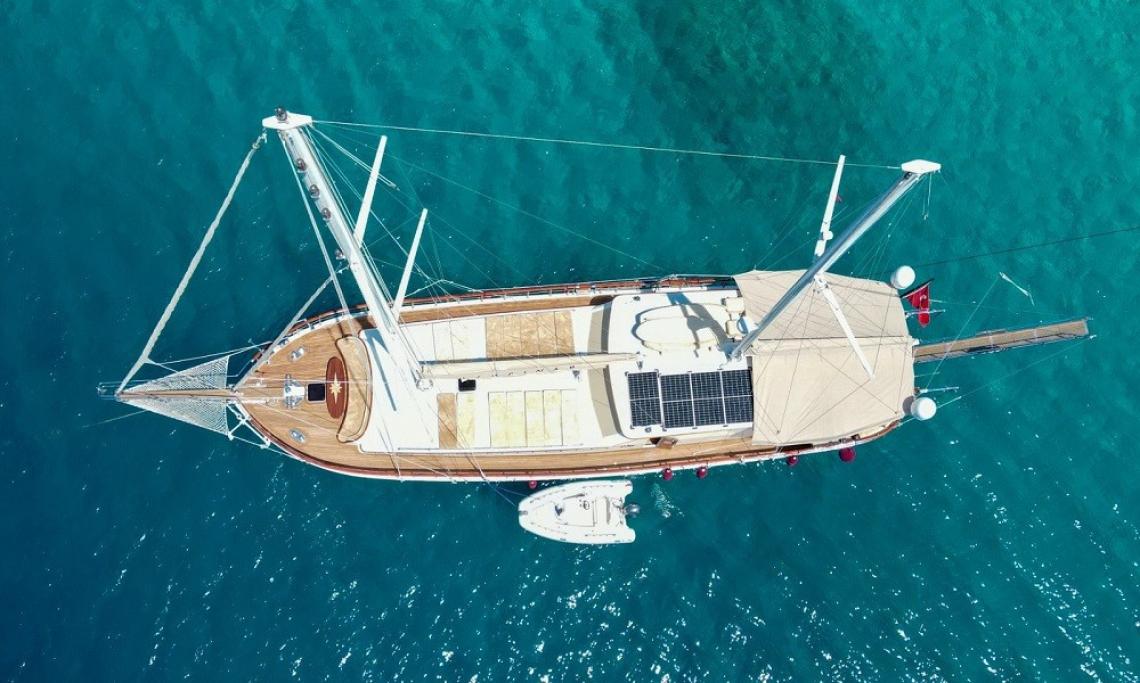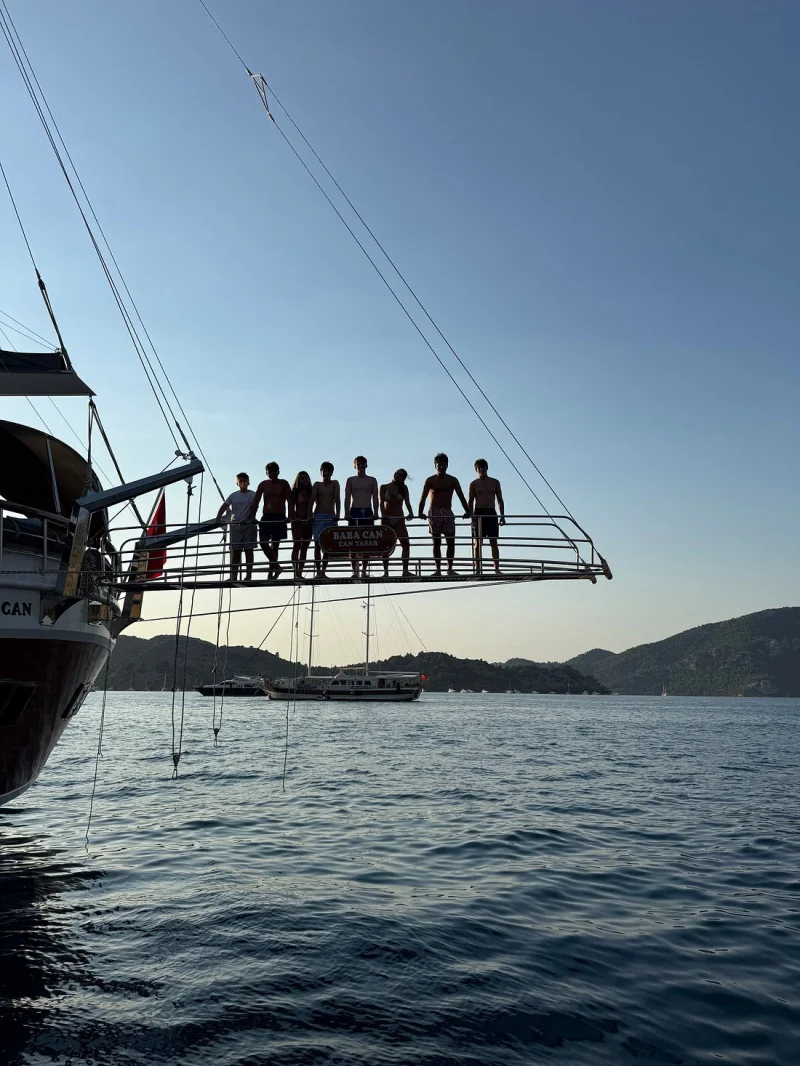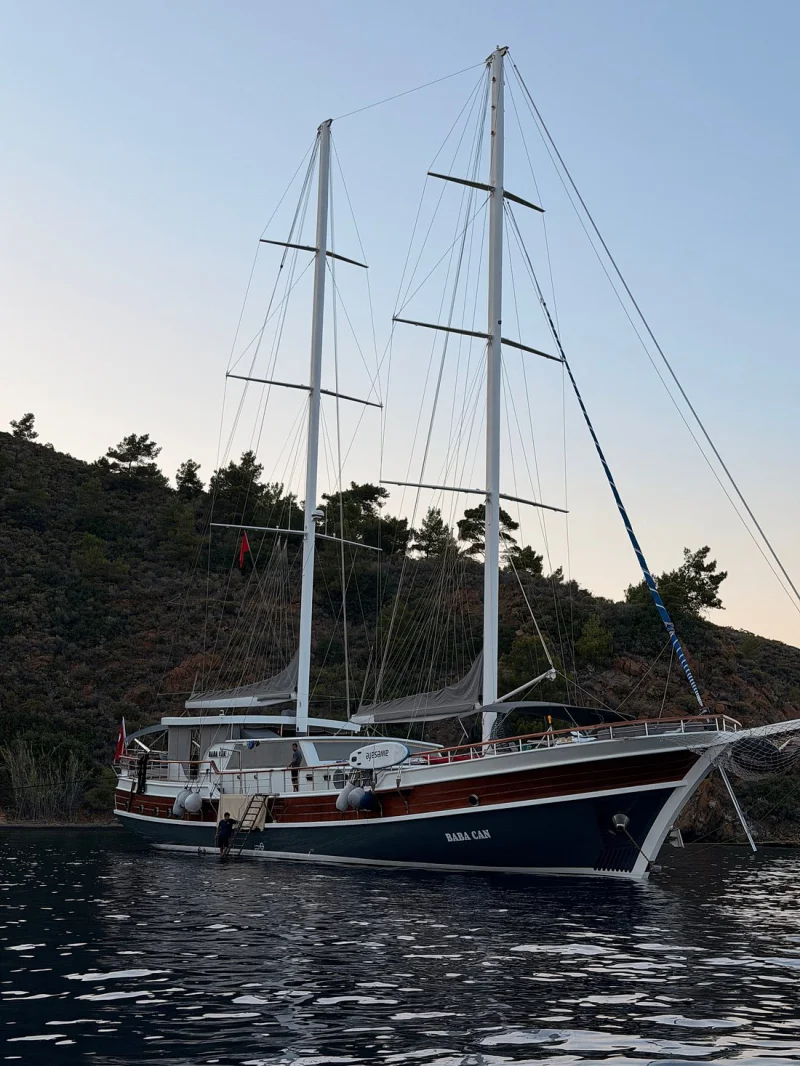

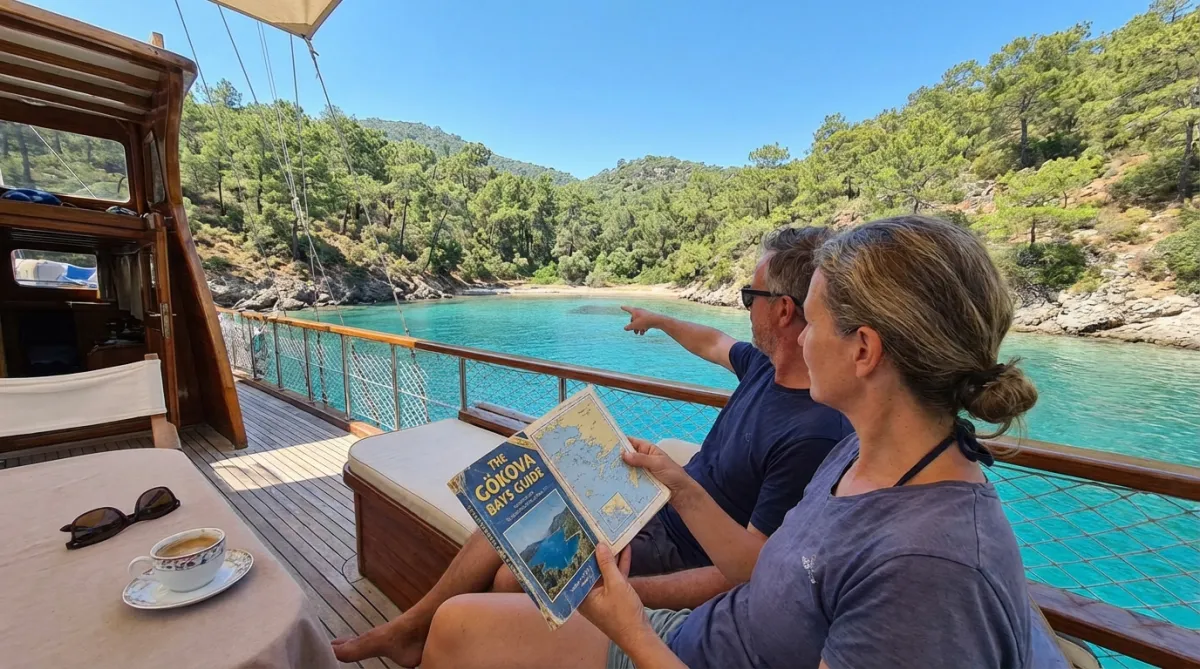
The Gökova bays sit inside one of Turkey’s most protected stretches of coastline: a long, narrow gulf framed by pine-covered mountains, with islands and anchorages that still feel unbuilt compared to much of the Aegean.
Most “Blue Voyage” itineraries never go beyond the western entrance. That’s where the day boats cluster, where the obvious stops are, and where first-timers spend most of their time. Push deeper into the gulf and you’ll usually find fewer boats, calmer nights, and better anchoring options — especially in the eastern half.
This guide covers the bays that are genuinely worth your time, the ones that are “fine but overrated,” and the practical details that matter when planning a gulet charter Turkey route through Gökova: holding, depth, crowd timing, and what the route really costs once you account for how gulets are priced.
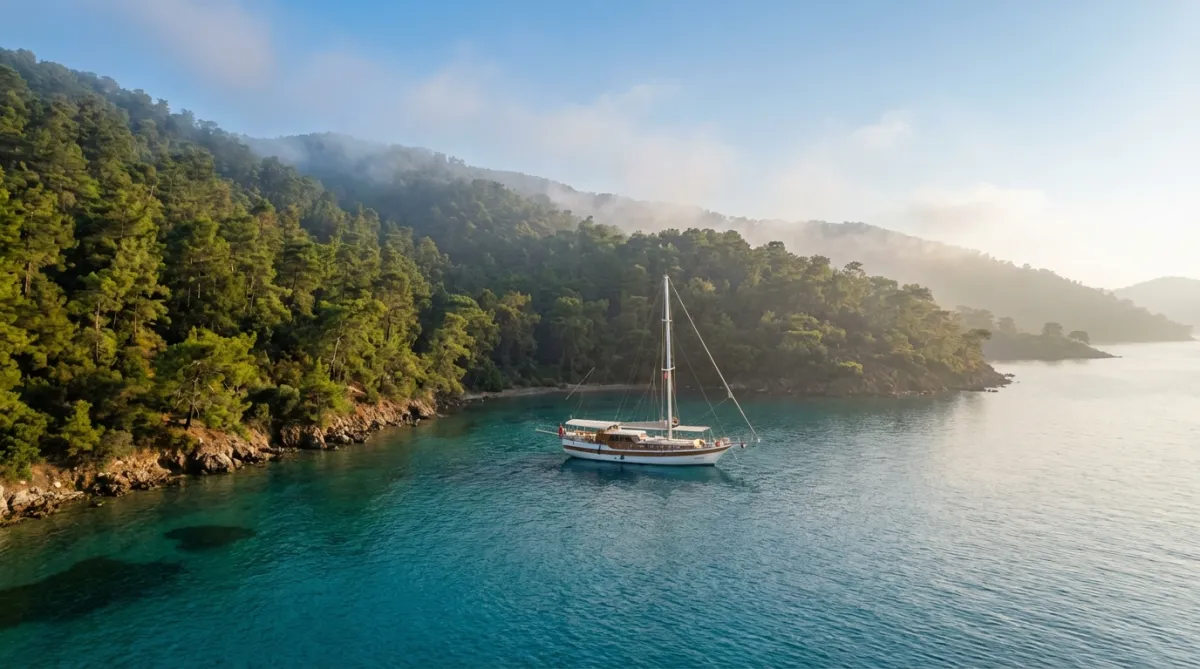
What Makes the Gulf of Gökova Different
The Gulf of Gökova (Gökova Körfezi) stretches roughly 100 km between the Bodrum Peninsula to the north and the Datça Peninsula to the south. It’s long enough that the “east vs west” decision actually changes your trip — not just your photos.
Crucially, the gulf is part of an officially protected area: Gökova Özel Çevre Koruma Bölgesi (Special Environmental Protection Area). That protection is why development is limited in many coves and why the coastline still looks like coastline — not a line of clubs and pontoons.
Shelter is the other advantage. In summer, afternoon thermals and regional winds can build outside the gulf, but many anchorages inside Gökova stay calm and usable. That’s why captains route guests here in peak season: it’s one of the more reliable places for comfortable nights at anchor.
Anchorages vary a lot. Some bays give you clean sand at 5–10 m. Others are rock-and-seagrass mixtures where lines ashore are the difference between a relaxing night and a stressful one. You don’t need to “be a sailor” to enjoy the trip — but you should understand why your captain chooses certain bays and avoids others in certain winds.
Sail the Hidden Bays of Gökova
Get our insider's route map for Gökova. Discover the best anchorages and hidden coves we've sailed for 15 years.
What It Costs to Charter Here (Realistic Numbers)
A weekly crewed gulet charter on the Bodrum–Gökova axis typically falls into these brackets (for 6–8 guests):
| Segment | Typical Weekly Range | Who It Fits |
|---|---|---|
| Economy | €8,000 – €10,000 | Older / simpler gulets, value-focused groups |
| Standard | €10,000 – €15,000 | Most well-kept 4–6 cabin gulets in season |
| Premium | €15,000 – €25,000 | Newer refits, better cabins, stronger service |
| Luxury+ | €25,000+ | High-end finish, standout crew, standout boats |
Peak weeks (July–August) usually sit in Standard and above for boats guests actually enjoy. May, June, September often come in lower for the same boat — and feel better on the water.
Important: “What’s included” depends on the contract structure. In Turkey, many crewed gulet agreements are priced as a package that includes meals and a daily limit on cruising hours, while others run as base fee + expenses (often managed via APA).
Here’s a practical way to budget without getting surprised:
| Cost Item | Often Included (Turkey crewed gulets) | Often Extra |
|---|---|---|
| Meals / full board | Yes (commonly) | If priced “bare” / APA style |
| Fuel / diesel | Often included up to a daily cruising limit | Extra cruising hours / long reposition days |
| Turkish port taxes & procedures | Commonly included | — |
| Mooring in Turkey | Sometimes included (depends on itinerary) | Big marinas / special berths |
| Drinks | Sometimes water/tea included | Soft drinks, beer, wine, spirits |
| Airport transfers | Sometimes | Often extra |
| Greek islands fees (if you cross) | No | Taxes, port fees, formalities |
If your booking uses APA (Advance Provisioning Allowance), a realistic planning range is ~25–35% of the charter fee, depending on route, food style, and cruising time. If your booking is package-style, confirm two things in writing: (1) meals/drinks policy and (2) average cruising hours per day included.
On-the-ground spending is often modest in Gökova compared to more commercial coastlines: many natural bays have no paid facilities, while village stops (like Çökertme) are about simple meals and local basics — not beach-club pricing.
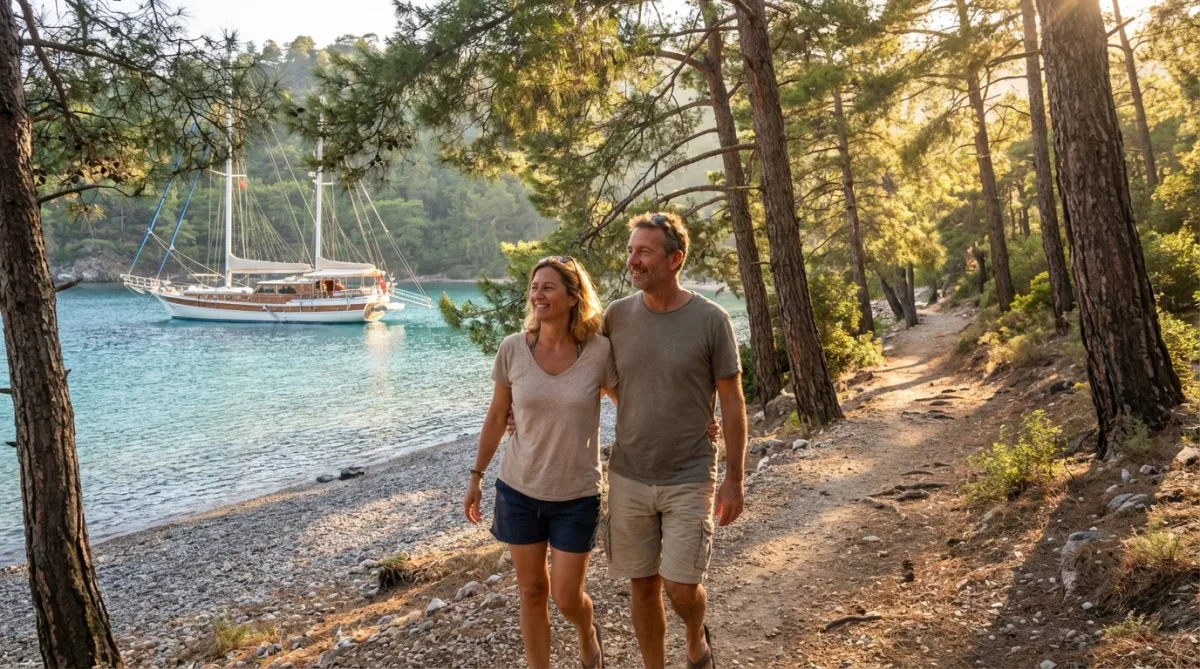
The Bays That Actually Deliver
English Harbour (İngiliz Limanı)
English Harbour is famous for a reason: it’s scenic, sheltered, and usually reliable for a calm night. Expect good holding where you find sand pockets around 6–10 m, but be ready for crowding in July and August.
Crowd rule: arrive early in peak season if you want a comfortable inner spot. Later arrivals often end up deeper, further out, and with less protection.
One underrated highlight is the shore: short forest walks here genuinely feel like a reset, especially early morning when the heat hasn’t built.
Çökertme
Çökertme is the “old-school route” feeling: a small village bay, simple quayside restaurants, and a stop that makes the trip feel Turkish in the best way.
Holding is usually straightforward in 4–8 m where sand is available. Many crews use it as a lunch stop or an early dinner stop rather than a deep overnight plan in peak heat. If you sleep badly in warm, still air, you may prefer a more shaded northern bay for the night.
Karacasöğüt
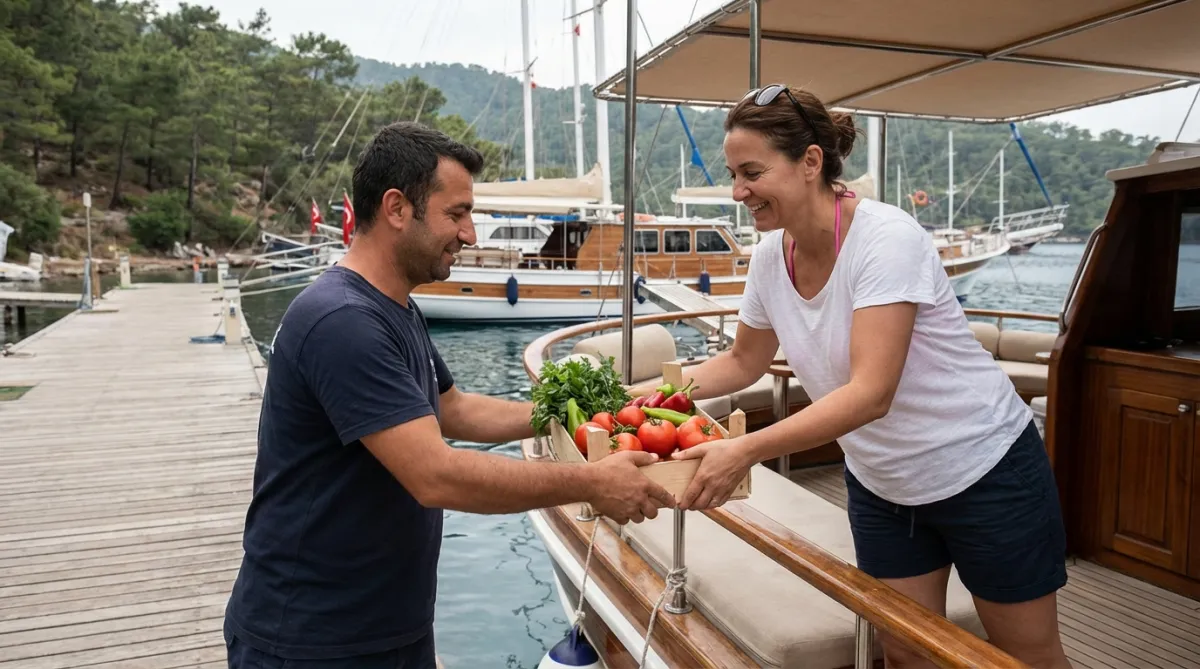
Karacasöğüt is a practical base near the eastern side: it’s a place where you can resupply and reset without running back to major marinas. On calm days, water clarity can be excellent, especially away from any runoff points and in windless mornings.
It’s also one of the better “logistics” stops if you’re spending multiple nights deeper east — top up water, adjust provisions, and then disappear into quieter bays.
Akbük
Ask captains where they go for a genuinely quiet night and Akbük comes up often. The bay is wide, with good anchoring opportunities where sand patches are available around 6–12 m. It’s typically less crowded than the headline stops because it’s further in and has less “name recognition.”
There’s minimal infrastructure. That’s the appeal: a proper anchor night, a simple tender landing, pine slopes, and the kind of evening light that makes guests stop scrolling and start looking.
Orak Island: Better Than Its Reputation Suggests (If You Time It Right)
Orak Island sits near the western entrance zone of the gulf. It’s known for clear water and snorkeling, but the experience depends heavily on timing and where you anchor.
Midday, the area can fill with day boats. Early morning and late afternoon are a different world. If you can arrive the night before, sunrise to mid-morning is often the best window: calmer water, better visibility, better photos.
Anchoring note: holding can be patchy in places (sand between rock). In certain coves and wind angles, lines ashore can be the norm. On larger gulets, captains often prefer areas with more swinging room and cleaner holding rather than forcing tight coves.
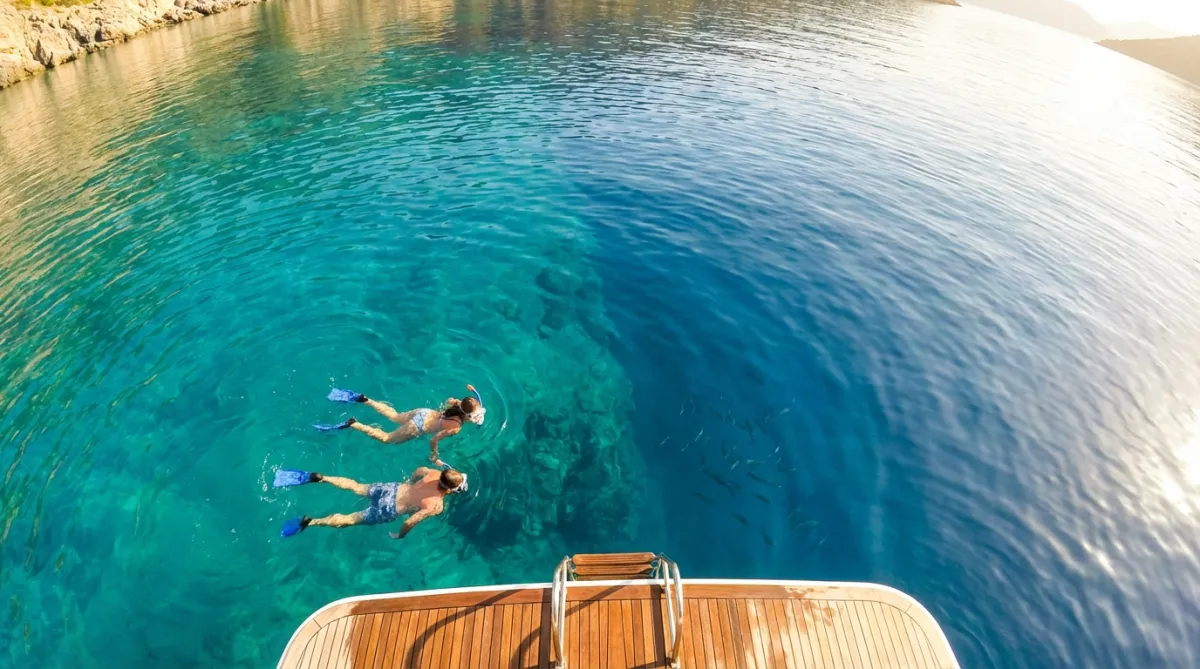
Seven Islands (Yedi Adalar): What Most Guides Miss
Yedi Adalar is where Gökova starts to feel like a protected gulf rather than “the next stop from Bodrum.” Many itineraries treat it as a lunch stop. That’s a mistake. The channels and anchor pockets here reward anyone who stays overnight: quieter water, better early light, and often more interesting marine life.
Etiquette matters here. This area sits inside a protected zone, and your captain should avoid anchoring on seagrass meadows. Noise carries across enclosed water. Treat it like a shared natural room, not a marina.
Short shoreline walks (where accessible) can be excellent in early morning. It’s one of the few areas where you can get an elevated view across the gulf without needing a “tour.”
Bay-by-Bay Summary (Holding, Depth, Crowds)
| Bay / Location | Holding Quality | Typical Depth (Anchor) | Best For | Crowd Level (July) |
|---|---|---|---|---|
| English Harbour | Sand pockets, generally good | 6–10 m | Overnight, calm nights, forest walks | High (arrive early) |
| Çökertme | Sand, reliable | 4–8 m | Lunch / village dinner, local feel | Medium |
| Karacasöğüt | Mixed (varies by spot) | 5–10 m | Swimming, provisioning, reset stop | Low–medium |
| Orak Island (popular coves) | Patchy in places; attention needed | 5–12 m | Snorkeling, photos (best early) | High midday, low AM/PM |
| Yedi Adalar | Variable; lines ashore common in pockets | 4–10 m | Snorkeling, isolation, sunrise calm | Low–medium |
| Akbük | Often very good where sand is found | 6–12 m | Quiet nights, families, wide bay | Low |
The Bodrum–Gökova Route: A Realistic 7-Night Sequence
A standard Bodrum-to-Gökova week often covers roughly 120–170 nautical miles depending on how far east you push and how much time you spend under way. A practical, guest-friendly sequencing looks like this:
Day 1: Depart Bodrum, short hop to a nearby swim/overnight stop (often Orak area or a Bodrum-adjacent bay). Keep night one simple so everyone settles in.
Day 2–3: Move deeper into the gulf for an overnight at English Harbour or another sheltered northern bay. This is usually the point where Gökova starts to “feel different.”
Day 4–5: Spend your prime time in Yedi Adalar and at least one quiet eastern bay (Akbük / Karacasöğüt zone). This is the part guests remember most because distances are shorter and “anchor time” is longer.
Day 6: Return via the south shore with a village stop (Çökertme is a classic). Dinner ashore works well here.
Day 7: Head back toward Bodrum with a final swim stop near the western entrance zone, then position for disembark.
The contrarian truth: if you’re on a Bodrum gulet charter and you spend multiple nights repeating the same near-Bodrum stops, you’re leaving Gökova’s best parts untouched. The eastern half is where the gulf becomes its own destination, not just “the next bay.”
Practical Notes That Prevent Bad Nights
Holding & anchoring: sandy patches exist, but seabed can change quickly. Your crew handles anchoring, yet it helps to understand why they sometimes use stern lines ashore: tighter coves + variable holding.
Cruising hours: many Turkish crewed gulet agreements limit time under way to an average daily amount (commonly around a few hours). If you plan long reposition legs, confirm what’s included and how extra cruising time is charged.
Tender landings: many Gökova bays have no proper jetty. Pebble and rock landings are normal. Bring water shoes and treat wet rocks like ice.
Wind timing: summer afternoons often bring stronger breezes. Plan exposed swim stops for morning and use enclosed bays for late afternoon and night.
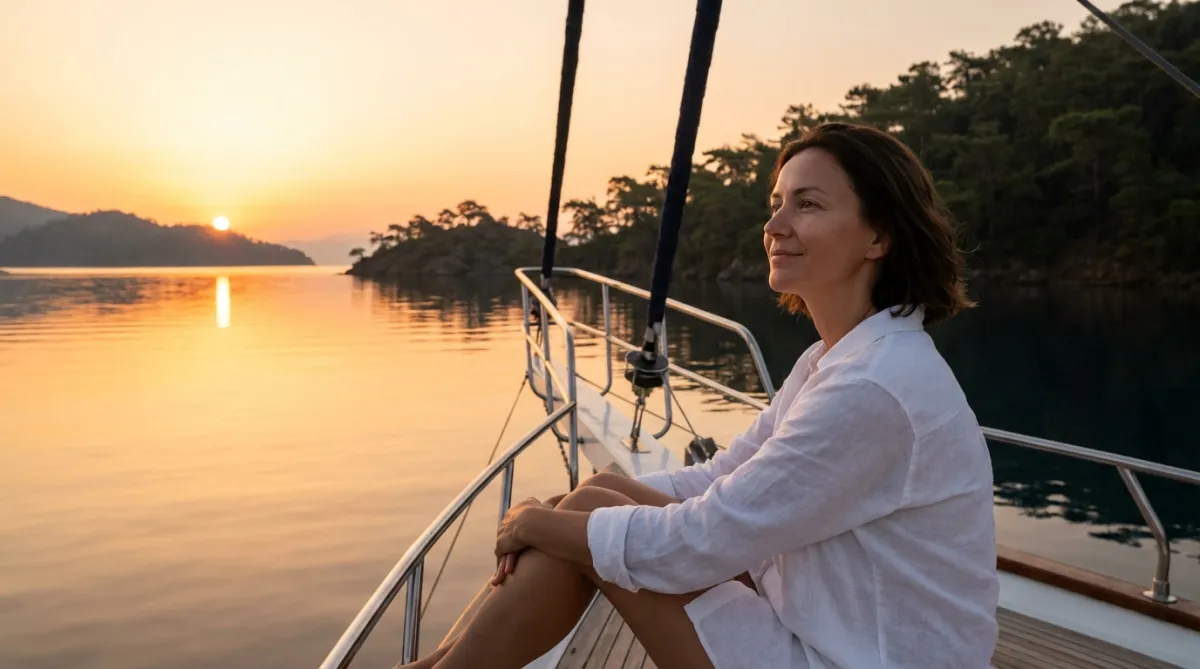
Photos: the best light is early morning. If you want “the shot,” be up before 8am and shoot from the bow while the water is still flat.
When to Go (What Actually Feels Best)
May, June, and September are the honest answer for most guests: warm enough water for swimming (especially from late May onward), fewer boats, and less heat at night.
July and August give the warmest water and longest days, but also the tightest crowd timing at headline stops. If peak season is your only option, spend more nights deeper east (Akbük / Karacasöğüt / Yedi Adalar zone) to avoid the midday pressure around the western entrance area.
Families often do best in early summer (June): calmer nights, shorter passages, and less “tender chaos” at crowded bays.
The key insight: Gökova rewards guests who push past the obvious stops. The western end is where itineraries begin. The eastern half is where the gulf becomes something genuinely different from the rest of the Turkish coast. Plan at least two nights deeper in — most guests who do wish they’d planned three.
FAQ (Quick Answers)
Is Gökova sheltered in summer?
Often, yes — many anchorages inside the gulf remain comfortable even when conditions are livelier outside.
Do we need to use lines ashore?
Sometimes. In tighter coves with mixed seabed, stern lines help the boat sit safely and avoid dragging.
Is Orak Island always crowded?
No. Midday can be busy. Early morning and late afternoon are dramatically calmer.
What’s usually included in a Turkey crewed gulet charter?
Often meals and fuel up to a daily cruising limit are included, while drinks, transfers, and international fees may be extra. Always confirm in writing.
References
- Gökova Körfezi (Turkish Wikipedia) – Basic geography and dimensions (including ~100 km length).
- Sustainable Peace Foundation – Gökova Bay Community Conservation Project – Background on SEPA status and protection context.
- Turkish State Meteorological Service (MGM) – Sea Surface Temperature – Official sea surface temperature readings (including Bodrum station).
This article was last updated on October 12, 2026.
I have over ten years of experience in luxury yacht charters. I focus on creating amazing sailing experiences along the Turkish Riviera. As the CEO of De Yachting since 2010, I have managed many successful charters. I know Turkey's most beautiful coastal spots very well.
Areas of Expertise
Have questions about yacht chartering?
Feel free to reach out directly