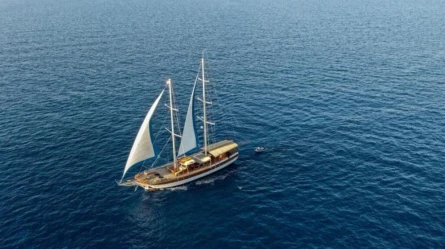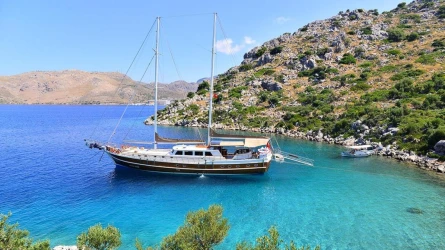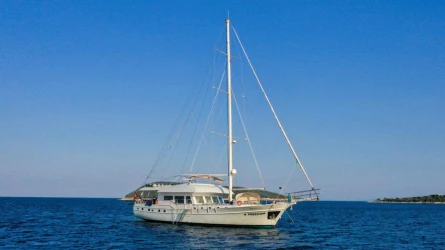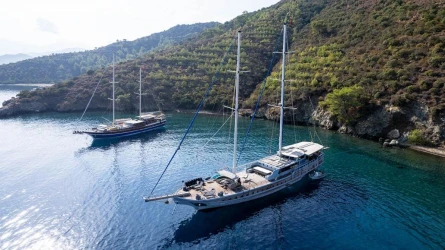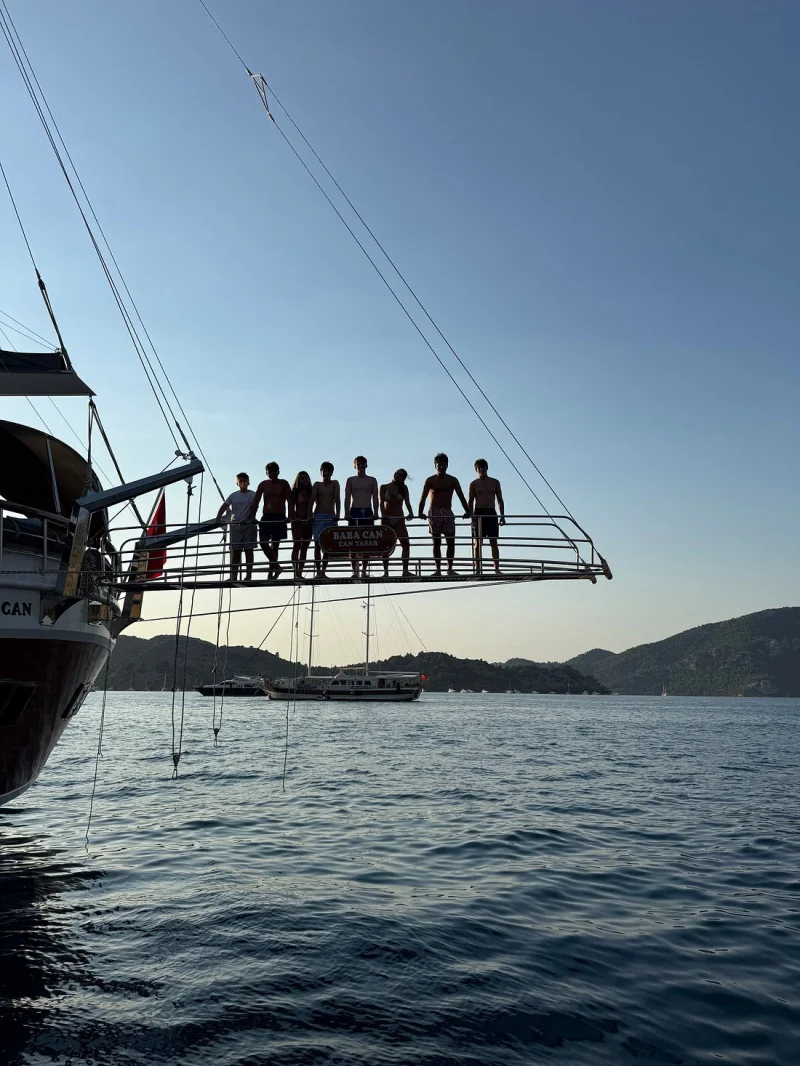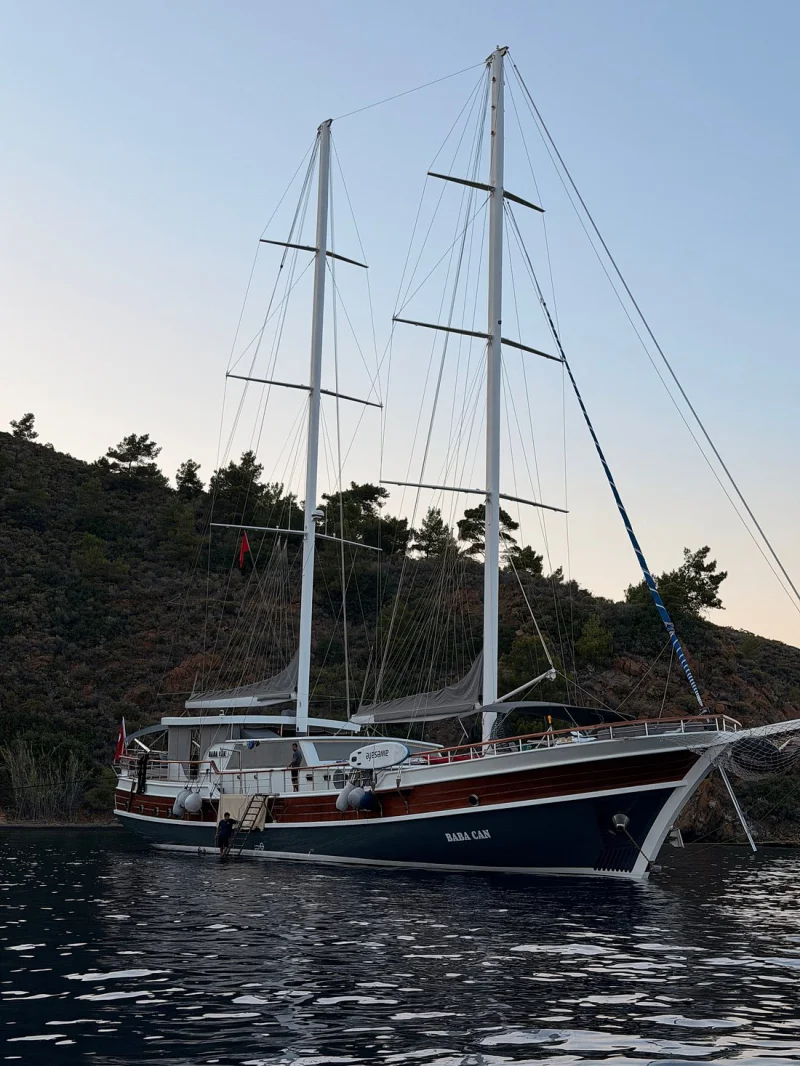


Most charter guides tell you "tipping is appreciated but not mandatory." Here's what 15 years of operations actually shows: gulet crew tipping happens on the vast majority of charters, and crews absolutely factor it into their seasonal income. The awkwardness comes from not knowing how much, when, or how to distribute it.
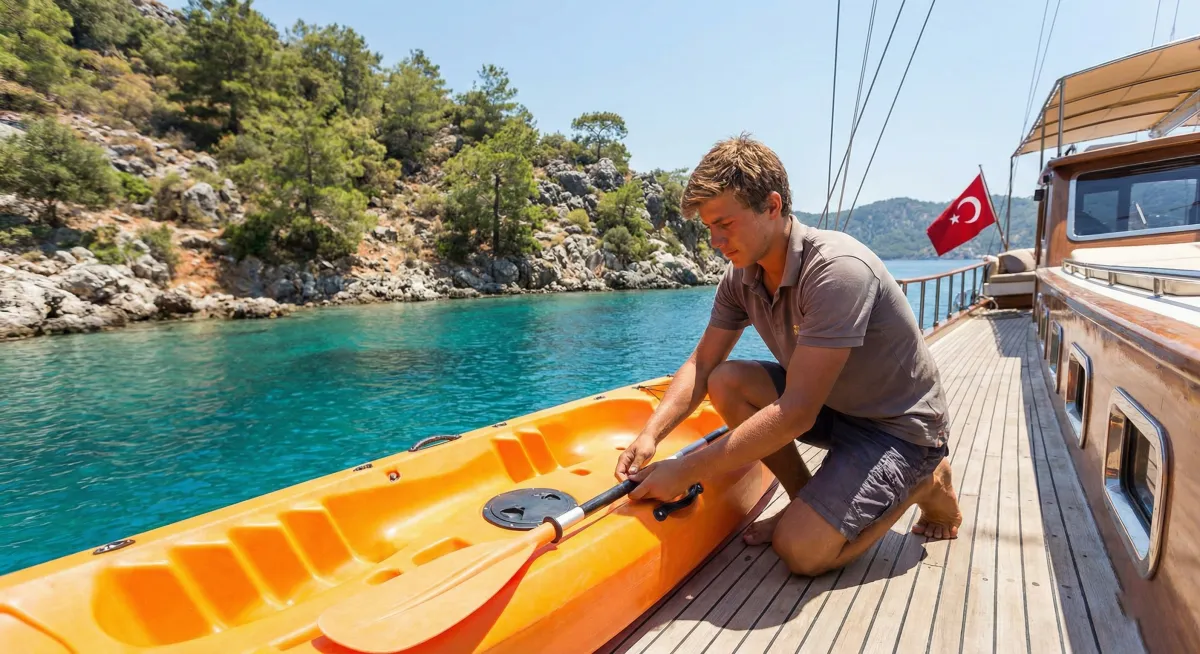
Traditional wooden vessels operating along the Turkish Riviera typically carry 3-5 crew members depending on vessel size. A standard 6-cabin gulet runs with a captain, chef, deckhand, and hostess. Larger 8-cabin vessels add another deckhand. Each role contributes differently to your week, which affects how you might distribute appreciation.
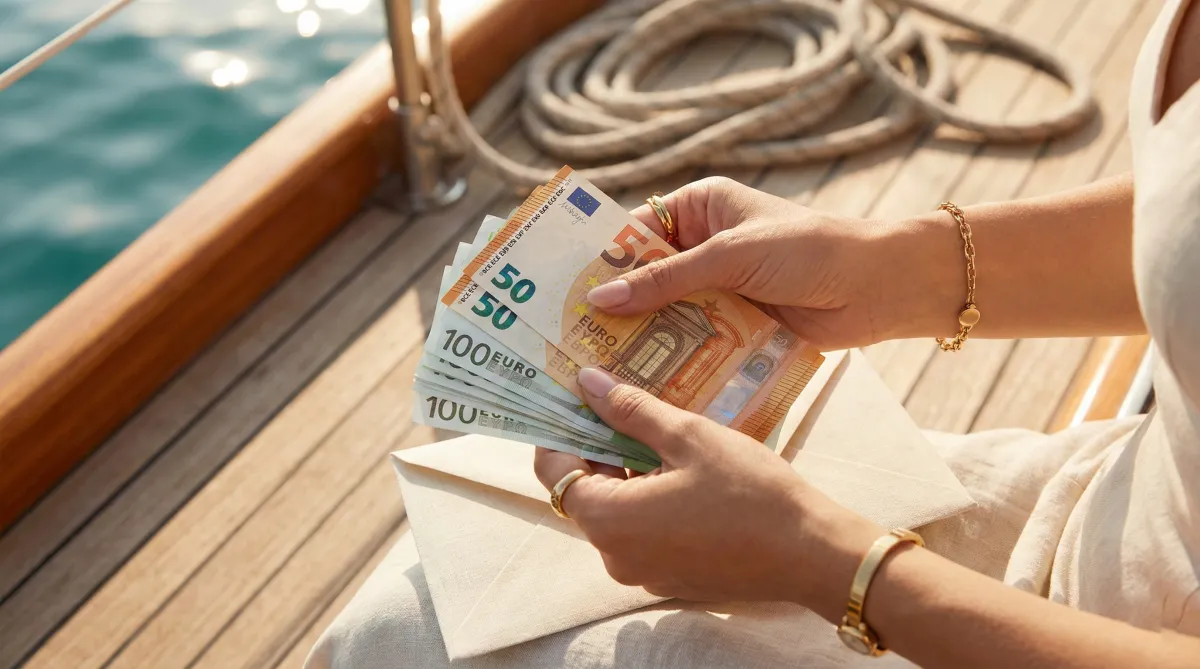
The industry standard sits at 5-10% of your charter fee, paid in cash at the end of charter. That €10,000 week translates to €500-€1,000 total crew tip. Sounds straightforward until you realize Turkish lira vs euro creates confusion, and nobody explains the envelope system clearly.
The Real Numbers Crews Expect (Not What Brochures Say)
Charter operators rarely mention that crew salaries during high season differ significantly from shoulder months. Summer crews on popular routes earn base wages around €800-€1,200 monthly, with tips often doubling that income. Off-season? Tips become their primary earnings.
Recent seasons show these actual tipping patterns from charter guests:
- Budget-conscious groups: €400-€600 total for week-long charters (around 5% of €8,000-€12,000 fee)
- Mid-range families: €700-€1,000 total (closer to 7-8% of €10,000-€14,000 fee)
- Luxury charters: €1,200-€2,000+ total (8-10% of €15,000-€20,000+ fee)
The surprising part? Service quality doesn't always correlate with tip percentage. Families with kids often tip higher because the crew essentially babysits. Couples on romantic getaways sometimes tip less despite perfect service.
Currency matters more than you'd think. Turkish lira tips require crew to exchange money at less favorable rates. Euro cash eliminates that hassle. Captains report that euro tips feel more valuable to crew than lira equivalents, purely because of exchange convenience.
Planning Your Gulet Charter?
Get our complete gulet tipping and planning guide. We'll help you handle every detail with confidence.
How Service Charge Confuses Everything
Here's what catches guests off-guard: some operators include a "service charge" in the base charter fee. Sounds like tipping is covered, right? Wrong. That charge typically goes to the company, not directly to crew pockets.
When booking, ask specifically: "Does the quoted price include crew gratuities?" Most Turkish gulet charters quote the vessel rate separately from provisions and tips. The APA (Advance Provisioning Allowance) covers food and fuel, not crew appreciation.
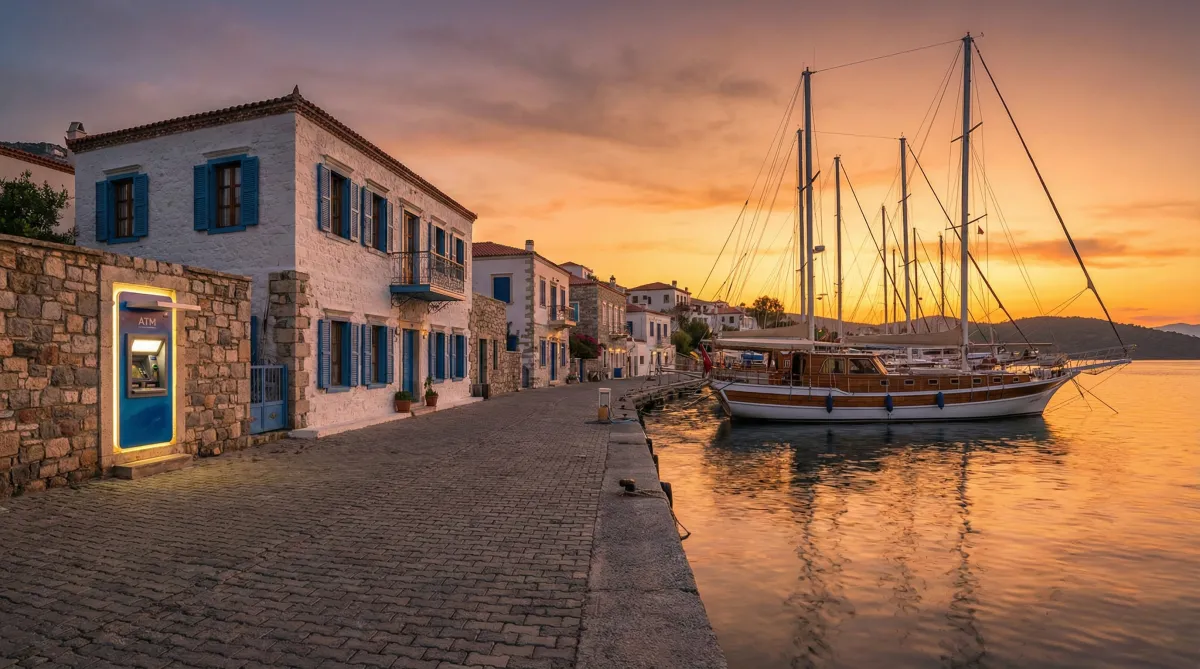
We've seen guests arrive thinking everything's included, then feel pressured when the captain mentions tipping on day six. That's why clarifying upfront prevents awkward final-day scrambles to ATMs in small Turkish coastal towns.
The cultural expectation in Turkey leans toward cash tips rather than adding gratuities to credit card payments. Crews prefer tangible envelopes they can distribute immediately rather than waiting for company processing.

Distribution Methods: One Envelope or Individual Tips?
Two approaches dominate, and crews have strong preferences you won't hear about:
- Single envelope to captain (most common): You give one envelope with the total amount to the captain. The captain then shares it based on crew rank and performance. Captains typically take 30-35%, chefs get 25-30%, deckhands and hostesses split the remainder.
- Individual envelopes (more personal): You prepare separate tips for each crew member based on your interaction. Gives you control but requires understanding crew dynamics you might not see.
Most guests choose the single envelope method because it's simpler. But here's the point: if your chef made great meals while the deckhand did little, tipping rewards each person's work better.
Captains appreciate when guests ask their preference. Some crews pool all tips anyway, making individual envelopes pointless extra work. Others operate on performance-based distribution where individual recognition matters.
Timing creates another decision point. Popular advice says "tip on the final morning," but many experienced charterers give half mid-week and half at the end. This approach rewards good service and often improves attention for the charter's second half.
| Tipping Method | Crew Preference | Guest Ease | Best For |
|---|---|---|---|
| Single envelope to captain | High (simple distribution) | Very easy | First-time charterers |
| Individual envelopes | Medium (more personal) | Requires planning | Repeat guests who know roles |
| Mid-week + final split | Medium (motivating) | Moderate effort | Longer 10-14 day charters |
| Digital transfer | Low (delayed, fees) | Easy but impersonal | Last resort only |
When Things Go Wrong: Adjusting Tips for Poor Service
Nobody wants to discuss this, but service quality varies dramatically between gulet charter operations. We've handled complaints ranging from cold food to safety concerns. Does poor service justify reducing or eliminating tips?
Crew members working Turkish coastal routes often change vessels between seasons. A fantastic deckhand from last year might be on a different boat now. You're tipping the crew you actually sailed with, not the company's reputation.
If the service is not good—like unprepared meals, dirty cabins, or safety issues—talk to the captain during the trip. Don't show your displeasure by tipping less. Most problems stem from miscommunication or unrealistic expectations rather than negligence.
If a crew member is often rude or if the captain makes unsafe choices, you do not have to reward that. Reduce the tip proportionally and explain why in writing to the charter operator. They need that feedback for future bookings.
The flip side? Exceptional service deserves recognition beyond standard percentages. Crews who meet dietary needs, keep kids entertained for hours, or handle weather challenges well earn tips of 12-15%. These tips are famous in the charter community.
Cash Logistics: ATMs, Euros, and Turkish Lira
Here's a practical headache nobody warns you about: finding enough cash in small Turkish marinas. Bodrum and Marmaris have plenty of ATMs, but if you're ending your charter in Selimiye or Bozburun, options shrink fast.
Most Turkish ATMs limit withdrawals per transaction. Pulling out €1,000 in crew tips requires multiple transactions and fees. Plan ahead.
Bring euros from home if possible. Exchange rates at Turkish coastal ATMs favor the bank, not you. That €800 tip might cost you €850-€900 in actual withdrawal fees and poor conversion rates.
Crew acceptance: Euros > US Dollars > Turkish Lira, purely because of stability and exchange ease. Captains can exchange euros at better rates in larger cities during crew changes. Dollars work but require an extra step. Lira is fine but least preferred.
Small bills help. A €1,000 tip in €50 notes distributes more easily than five €200 notes. Crew members sharing tips appreciate not needing to break large denominations.
| Currency | Crew Preference | Exchange Ease | Recommendation |
|---|---|---|---|
| Euro (€) | ★★★★★ Highest | Easy - major cities | Best choice - bring from home |
| US Dollar ($) | ★★★★☆ Good | Moderate - extra step needed | Acceptable alternative |
| Turkish Lira (₺) | ★★★☆☆ Accepted | Direct but volatile | Only if euros unavailable |

What Captains Won't Tell You About Tipping Culture
After years of captain feedback, here's the uncomfortable truth: they expect tips and budget their income around that assumption. Turkish maritime culture treats gratuities as standard compensation, not optional bonuses.
This differs from some European yacht charter markets where crew salaries are higher and tips are genuinely extra. On Turkish gulet charters, tips often represent 40-60% of crew take-home pay during season.
Does that feel like pressure? It shouldn't change your tipping decision, but it explains why crews seem disappointed with 3-4% tips that might be generous elsewhere. Context matters.
The chef typically works the hardest hours, starting before guests wake and finishing after dinner. Yet captains traditionally take the largest share because of licensing and vessel responsibility. This hierarchy frustrates some chefs, leading to crew turnover mid-season.
Hostesses and deckhands, especially younger crew members, often rely almost entirely on tips. Their base wages barely cover living expenses during the season. That €150-€200 individual share from your charter genuinely impacts their summer earnings.
Smart Tipping for Different Charter Scenarios
- Family charters with kids: Bump to 8-10% if crew actively entertained children. Teaching kids to swim, organizing beach games, or showing patience during meals deserves recognition. Families often tip higher because they see the extra effort.
- Couples seeking privacy: Standard 5-7% works if crew respected your space while maintaining service. Crews who read the room and didn't hover unnecessarily earned their tip through restraint.
- Group celebrations (birthdays, anniversaries): If crew decorated, arranged special meals, or coordinated surprises, add €100-€200 beyond standard percentages. These extras require planning outside normal duties.
- Last-minute bookings: Crews that manage quick departures work harder than usual. They gather supplies quickly and change routes on short notice. Consider 7-9% minimum.
- Repeat bookings with same crew: Building relationships matters. If you specifically requested the same captain and crew, they'll remember your previous tipping. Consistency or slight increases show appreciation for continuity.

| Charter Type | Recommended Tip % | Base for €12,000 Charter | Key Factors |
|---|---|---|---|
| Budget-conscious | 5-6% | €600-€720 | Standard service, basic expectations |
| Couples/romance | 5-7% | €600-€840 | Privacy respected, quality service |
| Family with kids | 8-10% | €960-€1,200 | Childcare, patience, entertainment |
| Group celebration | 8-10% + €100-200 | €1,060-€1,400 | Special arrangements, decorations |
| Exceptional service | 12-15% | €1,440-€1,800 | Above and beyond care |
The Envelope Moment: Making It Not Awkward
Most guests dread the actual handoff. Do you make a speech? Shake hands? Just leave it on the table? Here's what works:
Final morning during breakfast or right before disembarkation, ask the captain for a private moment. Hand over the envelope with a simple: "We really appreciated your crew's hard work this week. Please distribute this as you see fit."
If you prepared individual envelopes, gather the crew (they'll expect this) and personally hand each one with specific thanks: "Your meals were incredible" or "Thanks for teaching my son to snorkel." Keep it brief—two sentences maximum per person.
Avoid over-explaining the amount. Saying "I know it's not much, but..." diminishes the gesture. Whatever you give, give it confidently. Crews would rather receive €500 with a smile than €700 with apologies.
Don't tip in front of other guests unless you're on a cabin charter where everyone's tipping separately. Private vessel charters should keep the transaction between you and the crew.

Worth Remembering
Gulet crew tipping functions as expected income, not optional gratuity, on Turkish charters. The 5-10% range covers most situations, with service quality and charter type pushing you toward either end. Cash in euros, handed over in the final hours, eliminates confusion.
The real insight after 15 years? Crews remember generous tippers and poor tippers equally. That reputation travels through the tight-knit Turkish charter community.
If you plan to book gulet charters often, your tipping history is noted in your guest profile. You may not even realize it.
References
- MYBA – Press and Documents – Industry charter framework and contract guidance widely used across professional yacht charter.
- Istion Luxury Yachts – Frequently Asked Questions – Published charter FAQ covering common crew gratuity ranges and end-of-charter tipping practice.
- AYCA – 2026 Captain Guidelines – Turkish charter-water operating context and professional captain guidance relevant to onboard crew standards.
- YachtCharterFleet – Captain and Crew Gratuities: Tips & How Much – Practical reference for common charter tipping percentages, cash handling, and guest etiquette.
- ECPY – European Committee for Professional Yachting – Professional yachting association reference for charter-sector standards and crew operations.
This guide is based on 15 years of operational experience managing gulet charters along the Turkish coast, combined with direct feedback from captains and crew members working the Bodrum-Marmaris-Fethiye routes.
This article was published on January 16, 2026.
I have over ten years of experience in luxury yacht charters. I focus on creating amazing sailing experiences along the Turkish Riviera. As the CEO of De Yachting since 2010, I have managed many successful charters. I know Turkey's most beautiful coastal spots very well.
Areas of Expertise
Have questions about yacht chartering?
Feel free to reach out directly