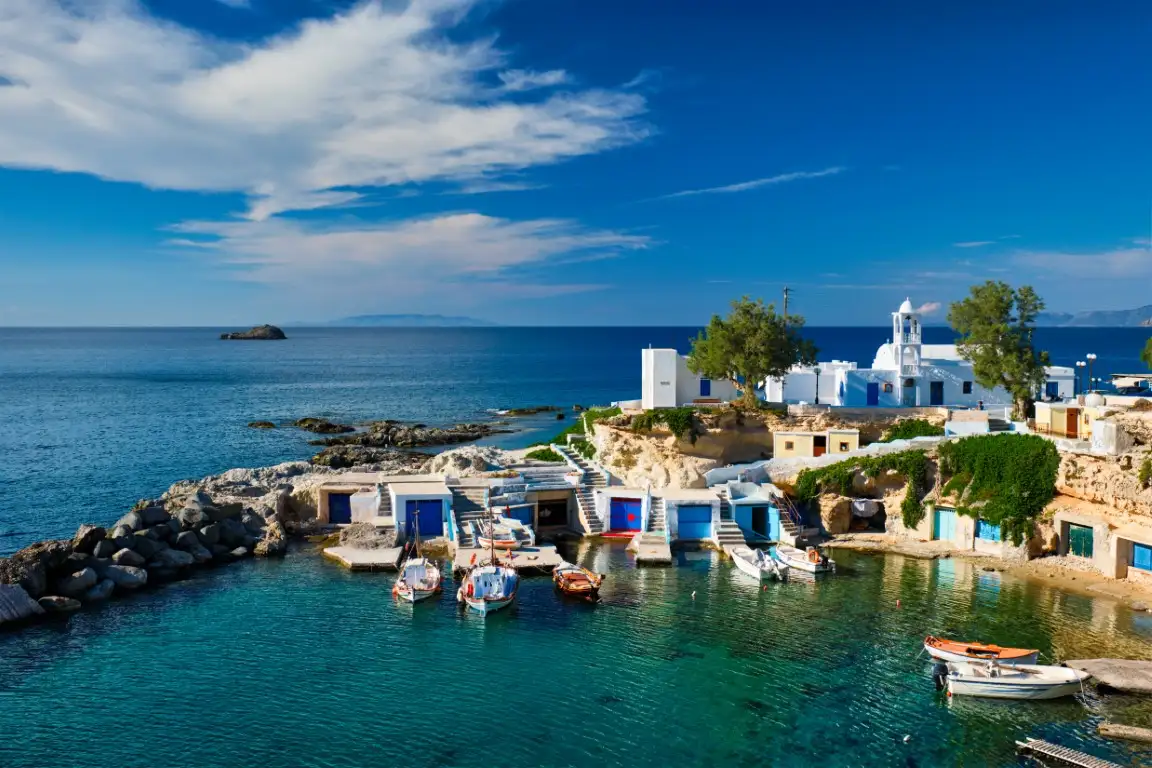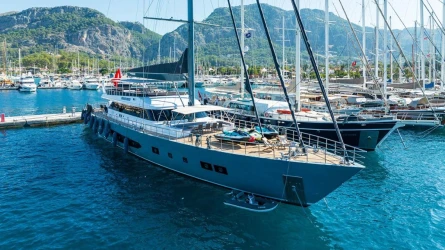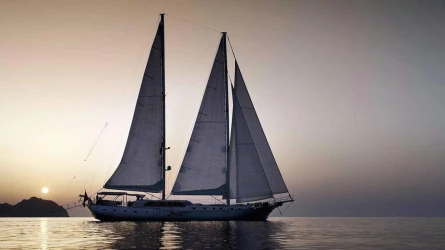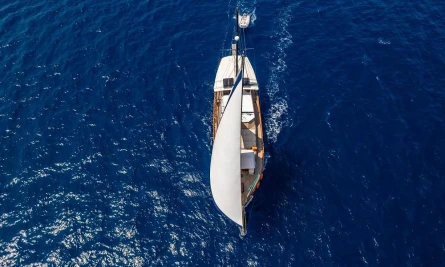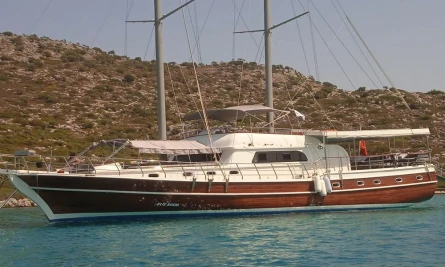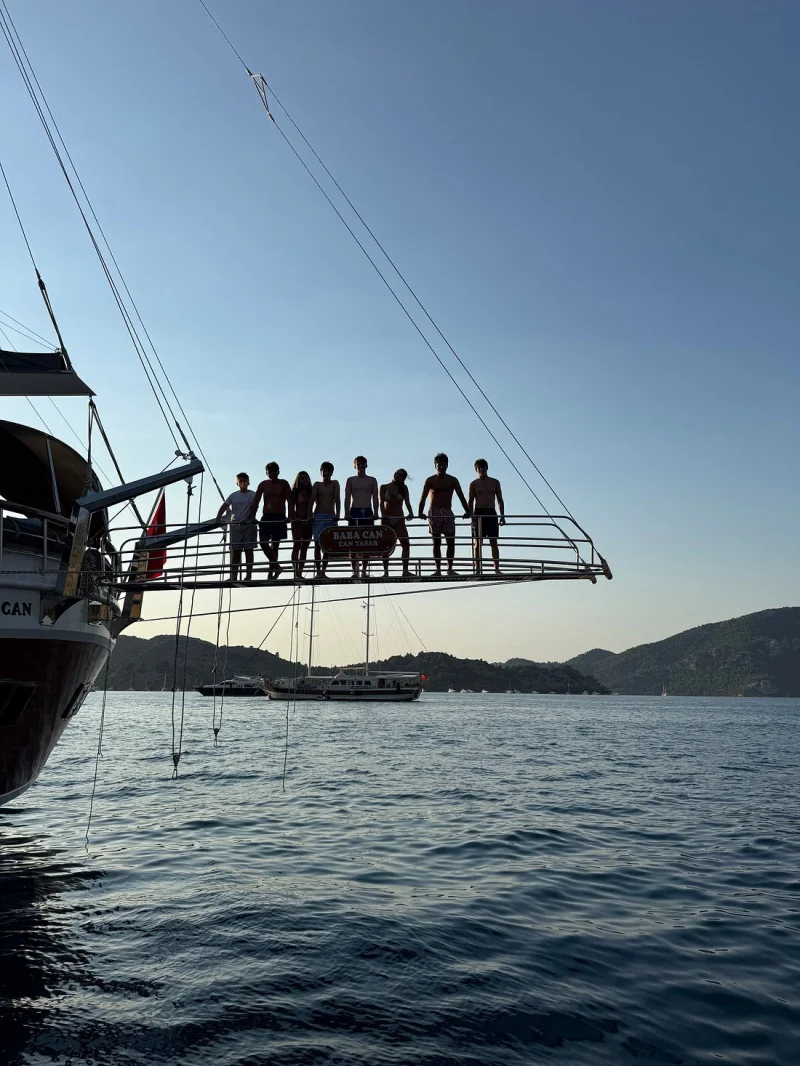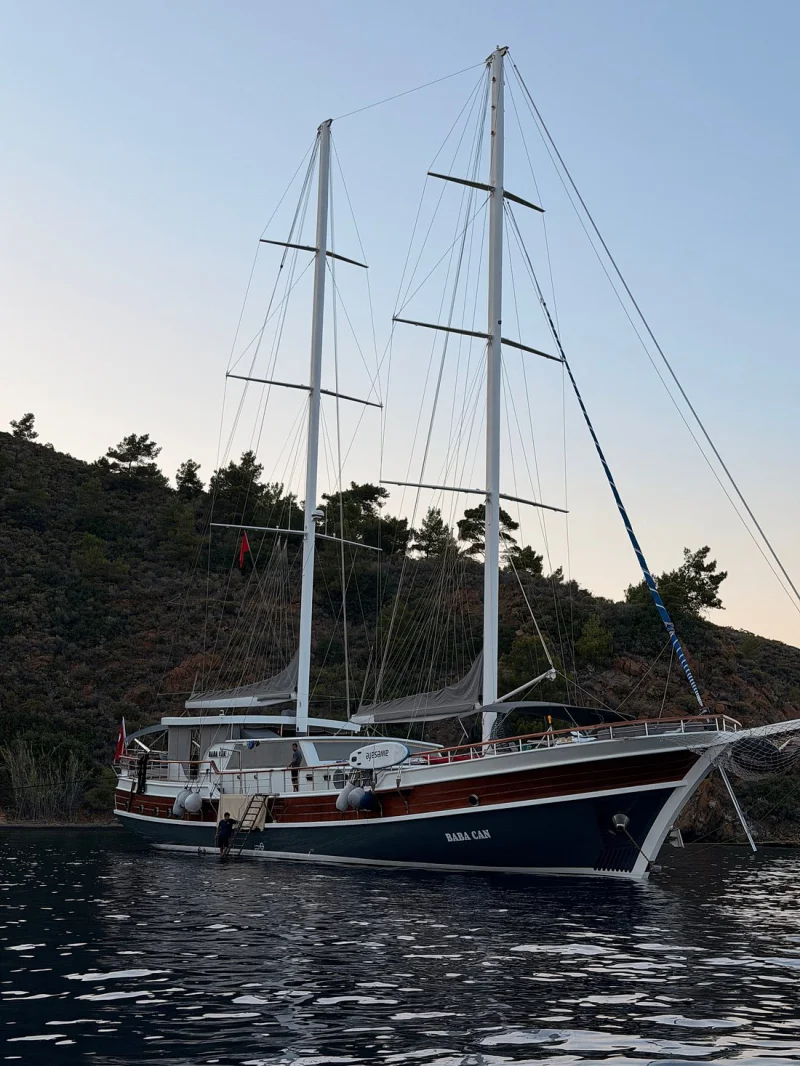


Sailing Turkey to Greek islands is one of the most rewarding routes in the Mediterranean — and one of the most misunderstood. Two countries, two flag states, two sets of port authority rules, all within a few nautical miles of each other. Done right, the crossing adds incredible variety to any charter. Done without preparation, it turns into paperwork delays and wasted sailing days.
This guide covers everything: the clearance process, the best crossings, which islands work for different charter styles, and the timing decisions that most brokers gloss over.
Yes, You Can Cross — But Preparation Is Everything
Private and crewed charter vessels cross between Turkey and Greece regularly throughout the sailing season — roughly May through October. Both countries follow international maritime conventions. The crossing is legal and well-established.
What surprises many first-timers is that the border isn't just a line on the water. It's a formal customs and immigration process requiring specific check-out and check-in procedures at designated ports. Your captain handles most of this. But understanding the steps yourself means you won't be caught off guard when a clearance stop adds half a day to your itinerary.
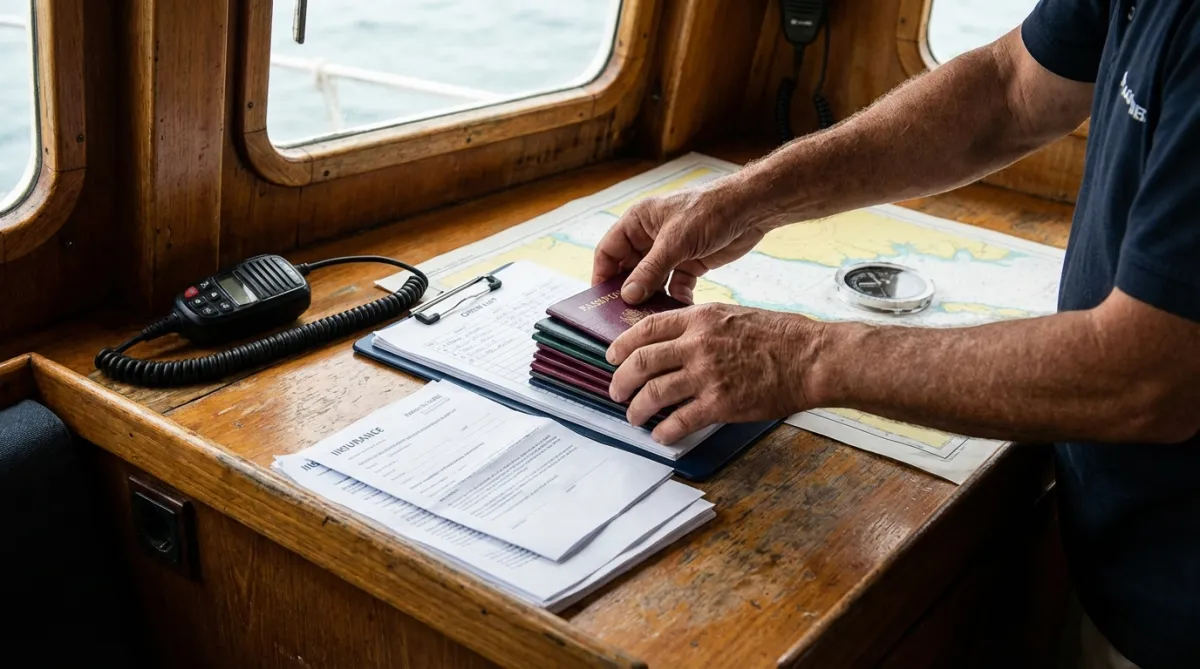
Yacht Clearance Turkey Greece: The Step-by-Step Reality
Port clearance is the formal administrative process by which a vessel obtains official permission from port authorities to depart one country's waters and enter another's. On the Turkey-Greece route, this means completing sequential customs and immigration steps at both ends — you can't skip steps or do them out of order.
Here's how the yacht clearance Turkey Greece process works in practice:
Leaving Turkey:
Sail Turkey & the Greek Islands
Get our expert route map for the Turkey-Greece crossing. Best anchorages, customs tips, and hidden gems included.
- Notify the harbor master / local agent at your departure port (often the day before — varies by port)
- Settle all port fees and obtain a departure stamp on your transit log — the vessel's official movement document in Turkish waters
- Receive your clearance papers — these travel with the vessel, not the passengers
Entering Greece:
- Proceed directly to a designated port of entry — no anchoring in Greek waters before clearing in
- Raise the yellow quarantine (Q) flag on approach
- Check in with Greek port police (Limenarchio), customs, and sometimes health authorities
- Pay the Greek cruising tax (TEPAI) if applicable / not already arranged
The whole process at a busy port like Kos Town or Rhodes typically takes 2–4 hours. At quieter entry points, it can stretch to half a day. Build that time buffer into your itinerary.
What most guides miss: Greek port police operating hours matter more than you'd think. Arriving after hours at a smaller entry port can mean an overnight wait. Captains experienced on this route know which ports can process arrivals later, especially in peak season. Smaller entry points can be less predictable — plan with slack time, and avoid “last-minute” arrivals.
A note on flag etiquette:
Once you clear into Greek waters, fly the Greek courtesy flag below your vessel's national ensign. The Q flag comes down after you've completed check-in. This is standard protocol and port police notice when it's done wrong — it signals an inexperienced crew.
Documents You Must Have Aboard
Travel documents: Non‑EU/EEA/Swiss nationals need a passport for entry. EU/EEA/Swiss nationals can generally travel to Greece with either a valid passport or a valid national ID card accepted as a travel document — but carrying a passport is still recommended for a sea border crossing and any checks along the way.
Turkey sits outside the Schengen Area, making this an external EU border crossing. If anyone in your party is not visa‑exempt for the Schengen Area, a Schengen visa must be arranged before the charter departs.
Beyond travel documents, the vessel needs:
- Ship's registration certificate
- Insurance documents
- Crew list (formal, with passport numbers)
- Charter contract (for crewed charters)
- Transit log (Turkey-issued)
Keep physical copies of everything. Greek authorities and port offices still commonly ask for paper documents. Digital copies on a phone may help, but should not be relied on as the only copy.
Passport validity note (for non‑EU nationals): Schengen rules generally require a passport issued within the previous 10 years and valid for at least 3 months after the intended departure date from the Schengen Area.
The Best Crossings: Distance, Time, and Conditions
The Aegean sits between Turkey and Greece, and some crossings are genuinely short. Others require more planning around weather windows and sea states.
| Crossing | Distance | Typical Sail Time | Entry Port (Greece) |
|---|---|---|---|
| Bodrum → Kos | 10–12 nm | 1.5–2.5 hrs | Kos Town |
| Marmaris → Rhodes | 25–30 nm | 4–6 hrs | Rhodes Town |
| Çeşme → Chios | 8–10 nm | 1.5–2 hrs | Chios Town |
| Fethiye → Rhodes | 55–65 nm | 8–12 hrs | Rhodes Town |
| Datça → Symi | 20–25 nm | 3–5 hrs | Symi Harbour |

The Bodrum to Kos yacht crossing is the most popular for good reason. It's short, conditions are generally manageable, and Kos Town has reliable port police availability in season. Families especially appreciate this crossing — it's over before anyone gets uncomfortable. If you're planning a gulet charter turkey itinerary from Bodrum, this is the natural first crossing to consider.
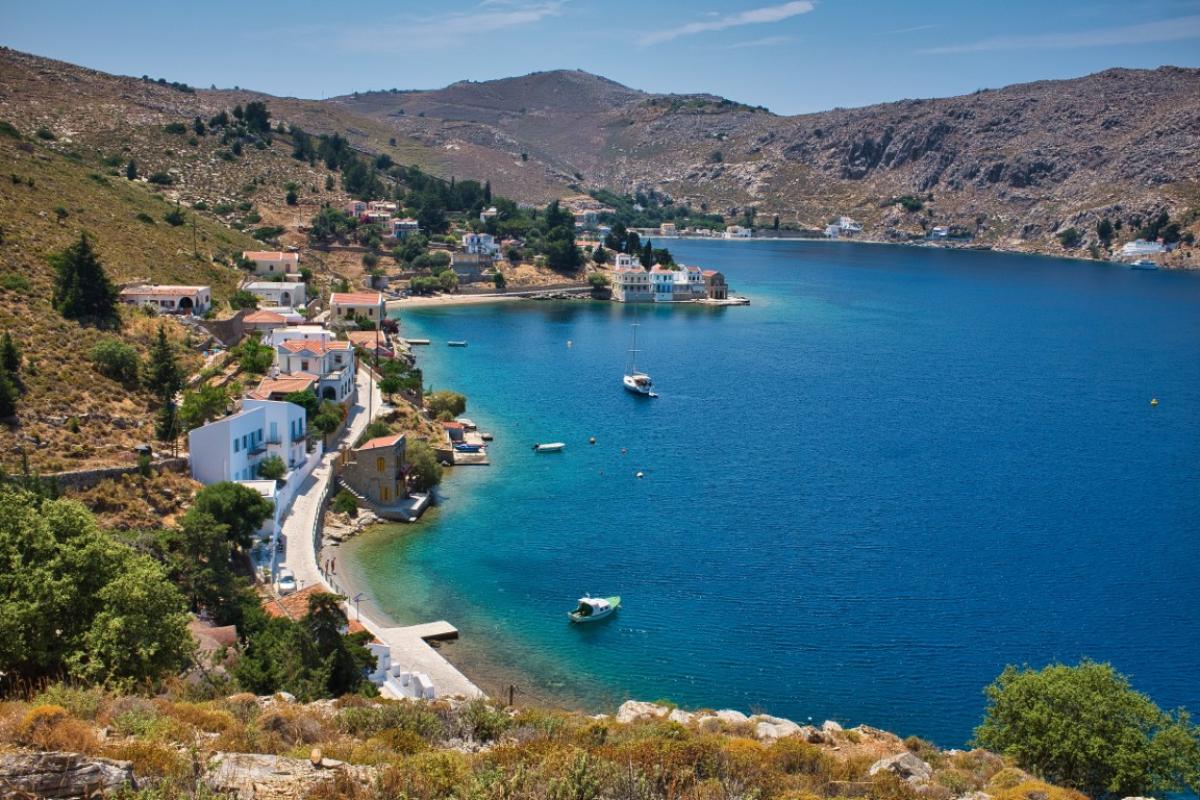
The Symi from Turkey yacht crossing — typically from Datça or Bozburun — is our favorite for experienced charter guests who want something less touristed. Symi's harbor is genuinely spectacular. The island sees far fewer charter boats than Kos or Rhodes. The crossing from Bozburun takes roughly 3–4 hours in calm conditions. For guests based around Marmaris or Bozburun, the Symi from Turkey yacht route offers a dramatically different atmosphere from the busier Dodecanese ports.
Which Greek Islands Can You Reach?
Popular advice focuses on Kos and Rhodes because they're the obvious entry points. But the reachable island list is longer than most itineraries suggest.
From Bodrum base:
- Kos (entry port, then island hop to Kalymnos, Leros, Patmos)
- Nisyros (volcanic island, dramatically underused by charter boats)
From Marmaris or Bozburun base:
- Rhodes (entry port, then south to Tilos or north toward Symi)
- Symi island — one of the most photogenic harbors in the Aegean
From Fethiye or Göcek base:
- Rhodes (longer crossing, but doable with an early start)
- Kastellorizo (Meis) — tiny, fascinating, under 2 nautical miles from the Turkish coast near Kaş
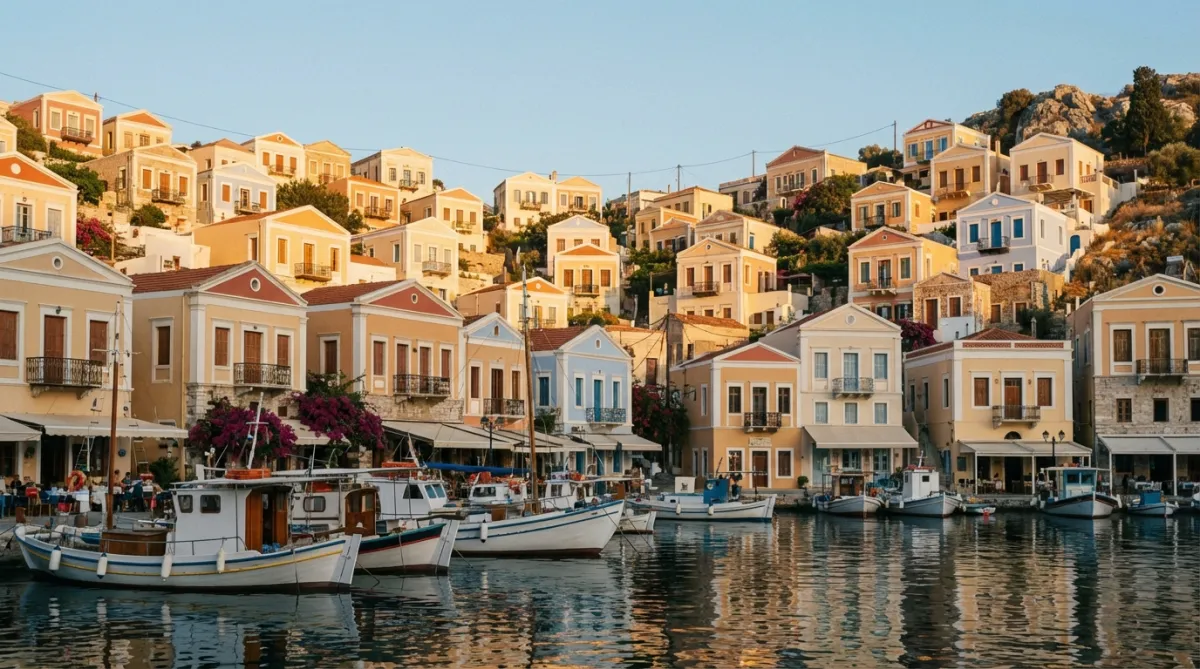
Kastellorizo deserves a separate mention. The crossing from Kaş is remarkably short. Port police there handle charter check-ins regularly. The island itself — a single harbor town with colorful neoclassical houses — is unlike anywhere else in the Aegean.
Practical note on Kastellorizo:
Port police hours here can be limited, especially in shoulder season. The island has no marina — just a small quay. Gulets over 20m may have berthing challenges, and anchoring off in the bay is the more realistic option for larger vessels. If your gulet cruise turkey itinerary is based around Fethiye gulet charter or gocek turkey, Kastellorizo is worth serious consideration — but confirm vessel size compatibility and timing before committing to it.
Port Clearance Costs: What to Budget
Costs vary by vessel size, season, and length of stay in Greek waters. Here's a more accurate way to think about the main line items:
TEPAI (Greek cruising tax): TEPAI applies to private and professional leisure vessels over 7m in Greek territorial waters, regardless of flag. It is charged per calendar month and calculated based on total length. For vessels over 12m, the rate is €8 per meter per month (calculated from the first meter). For vessels 7–12m, there are fixed monthly bands.
| Vessel length | TEPAI amount | How it’s billed |
|---|---|---|
| Over 7.00m up to 8.00m | €16 / month | Monthly (minimum 1 month) |
| Over 8.00m up to 10.00m | €25 / month | Monthly (minimum 1 month) |
| Over 10.00m up to 12.00m | €33 / month | Monthly (minimum 1 month) |
| Over 12.00m | €8 × LOA (meters) / month | Monthly (minimum 1 month) |
Quick examples (over 12m):
15m yacht: €120/month · 20m yacht: €160/month · 25m yacht: €200/month
Port fees in Greece:
- Municipal harbors: €15–€40/night for mid-size vessels
- Marinas: €60–€150/night depending on size and location
Turkish departure fees:
- Transit log formalities and port charges: typically €30–€80 at departure
Your captain or charter broker should give you a pre-trip estimate. If they can't, that's a signal to ask more questions. On a blue cruise turkey that includes a Greek island extension, budget an additional €400–€800 in administrative and port costs beyond the standard charter fee (more if you spend multiple months in Greek waters or berth in marinas often).
Broker and agent support can reduce friction significantly. Some operators arrange a local agent at the Greek entry port who pre-submits crew lists and speeds up the check-in process. This service typically costs €50–€150 but can save 2–3 hours at busy entry ports in July and August. For a group of 8–10 guests, that's usually money well spent.
Itinerary Planning Around Clearance Days
Don't plan your clearance crossing for a Monday morning. The conventional advice is to cross early in the week to maximize Greek island time. In practice, some smaller offices can be slower right after weekends. Mid-week crossings — Tuesday through Thursday — often process faster in real-world charter schedules.
Also, don't plan anything else on your clearance day. Treat it as a travel and admin day. Guests who expect to anchor at a beautiful Greek beach by lunchtime after a morning clearance are frequently disappointed. The process takes as long as it takes. Weather delays can compound the timing.
A well-structured 7-night itinerary with a Greek island crossing typically looks like this:
- Days 1–2: Turkish coast departure and first anchorages
- Day 3: Crossing day (travel + clearance)
- Days 4–6: Greek island sailing
- Day 7: Return crossing to Turkey
That gives you roughly 3 full days on the Greek side. For 10–14 night charters, the ratio improves significantly.
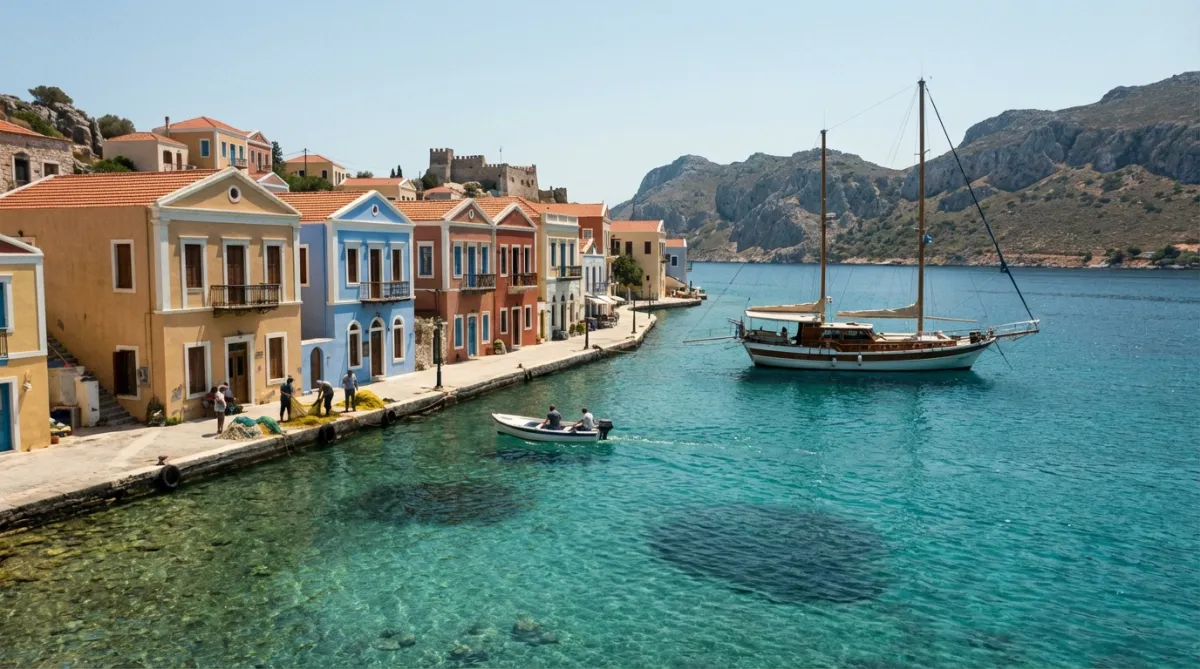
The Return Crossing: Turkish Re-Entry
The return crossing follows the same clearance process in reverse — but Turkish re-entry has a few specific requirements worth knowing before you depart.
Turkey requires re-entry at a designated port of entry. You cannot return to a small anchorage or private bay directly. The transit log — which was stamped on departure — must be reactivated at the Turkish port of entry before you can move freely in Turkish waters again. Your captain knows this, but it affects itinerary planning: your last Greek anchorage needs to be within reasonable distance of a Turkish entry port.
Common return entry ports include Bodrum, Marmaris, Datça, and Kuşadası, depending on where your charter ends. Build the same time buffer for the return that you built for the outbound crossing — 2–4 hours minimum at the Turkish port authority, longer in peak season. Trying to squeeze a return crossing and a final anchorage into the same afternoon is one of the more common itinerary mistakes on this route.
What Your Captain and Broker Handle (And What They Don't)
On a crewed charter — which covers the vast majority of gulet charter and motor yacht bookings on this route — your captain manages all port authority interactions. They know the harbor masters, carry the vessel documents, and have done this crossing dozens of times.
What they can't do: ensure your personal documents are in order. Expired travel documents, missing visas, and undisclosed nationalities are passenger responsibilities. Check your documents before you board.
Your charter broker should brief you on clearance expectations before the trip. A good broker also helps with port clearance procedure logistics — some arrange for a local agent at the Greek entry port who can pre-submit crew lists and speed up the check-in. This service typically costs €50–€150 but can save 2–3 hours at busy entry ports in July and August.
The port clearance procedure itself is the captain's domain. Your job is to have the right documents, the right visas (if required), and realistic expectations about timing.
Timing the Season Right
May and June offer the best combination of calm seas and manageable crowds. The Meltemi wind — a strong northerly that dominates the Aegean from mid-July through August — can make some crossings uncomfortable. It occasionally delays departures by a day. It's not dangerous for properly crewed vessels, but it's worth knowing before you plan a late-July crossing.
September is genuinely excellent for this route. Sea temperatures stay warm (24–26°C), the Meltemi eases, and Greek island ports are noticeably less congested. Many guests who've done this route in both July and September specifically request September on rebooking.
The Bottom Line
Sailing Turkey to Greek islands on a charter is straightforward when the paperwork and timing are handled properly. The crossing distances are short, the scenery is exceptional, and the contrast between Turkish and Greek island culture within a single week genuinely surprises most guests.
The practical takeaway: choose an experienced captain who knows this route, brief yourself on the clearance steps so you're not caught off guard, build a full clearance day into your itinerary, and consider a mid-week crossing. Check document validity and visa requirements (if any) for every passenger before you board — this is the single most preventable source of problems on this route.
Everything else — the turquoise bays, the harbors, the food — takes care of itself. Watching the Turkish coast recede and the Greek islands appear on the horizon is one of the better moments in Mediterranean sailing.
References
- Republic of Türkiye Ministry of Culture and Tourism – Yacht Registration Form (Transit Log) – Transit Log purpose and formalities.
- Your Europe (EU) – Travel documents for non‑EU nationals – Passport validity and issuance rules for Schengen entry.
- EEAS – Schengen visa‑free FAQs (PDF) – 10‑year issuance and 3‑month validity rule summary.
- Your Europe (EU) – Travel documents for EU nationals – ID card/passport travel documentation guidance.
- Noonsite – Greece Clearance – Practical guide to entry ports, formalities, and clearance flow in Greece.
- Noonsite – Greece TEPAI New Cruising Tax: Official Information – Practical reference for TEPAI scope and payment context.
This article was last updated on October 12, 2026.

I have over ten years of experience in luxury yacht charters. I focus on creating amazing sailing experiences along the Turkish Riviera. As the CEO of De Yachting since 2010, I have managed many successful charters. I know Turkey's most beautiful coastal spots very well.
Areas of Expertise
Have questions about yacht chartering?
Feel free to reach out directly