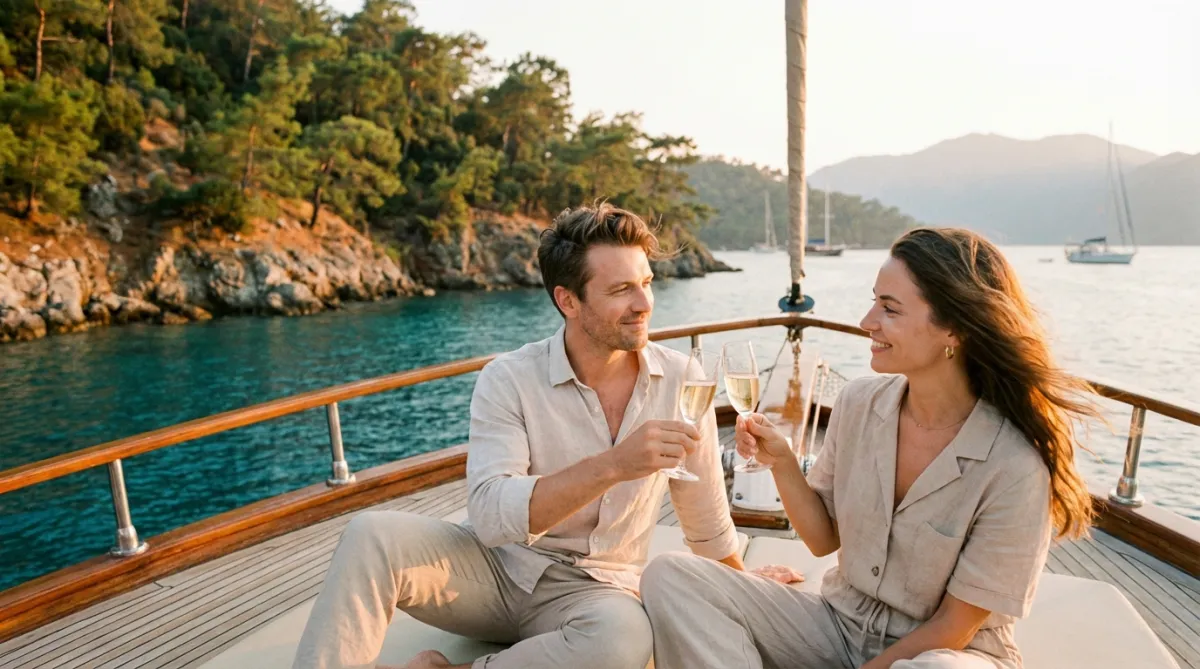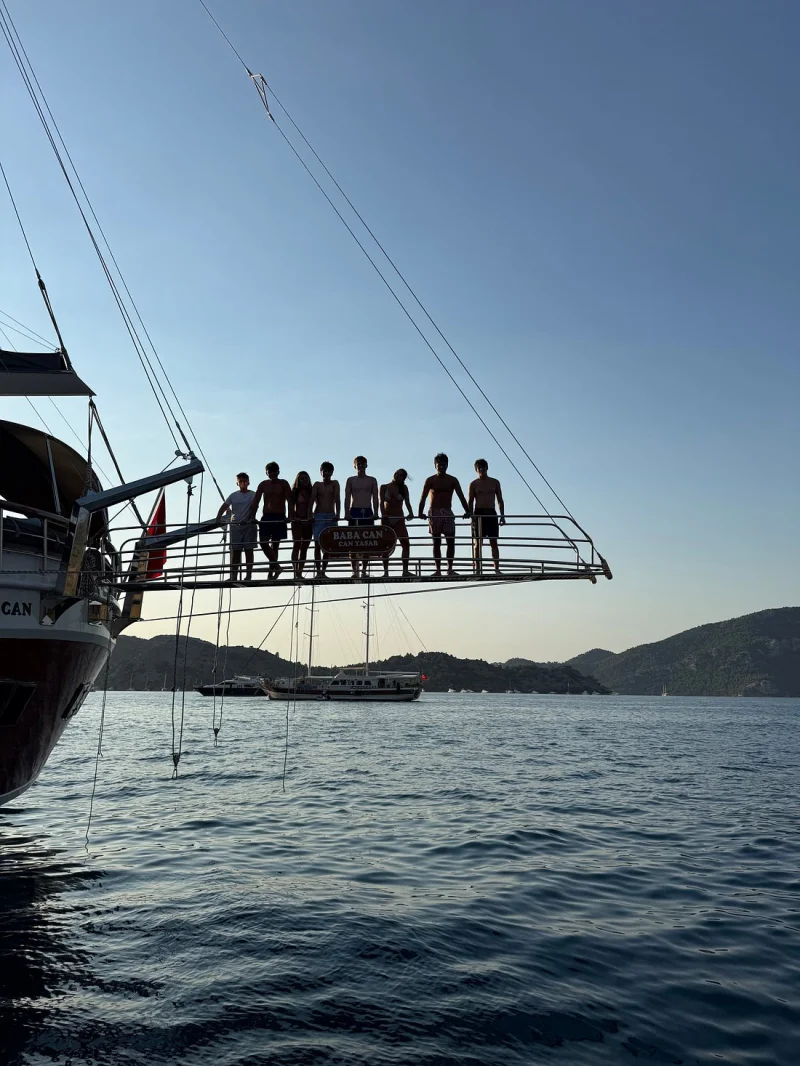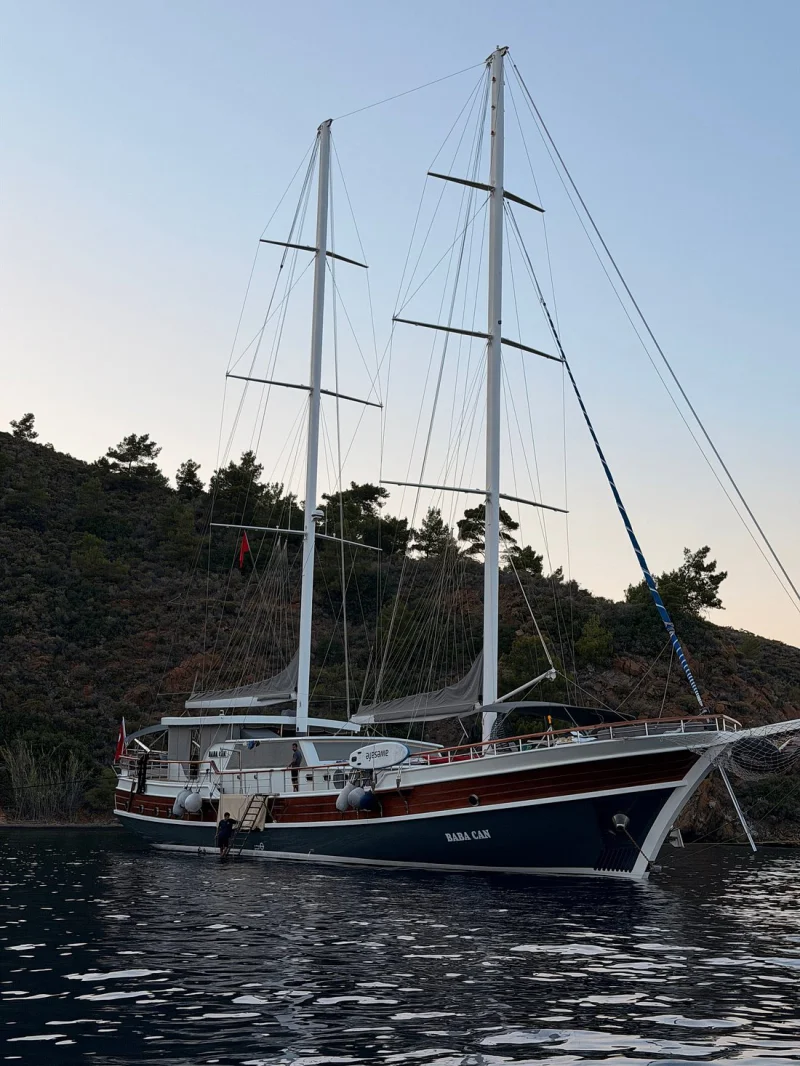

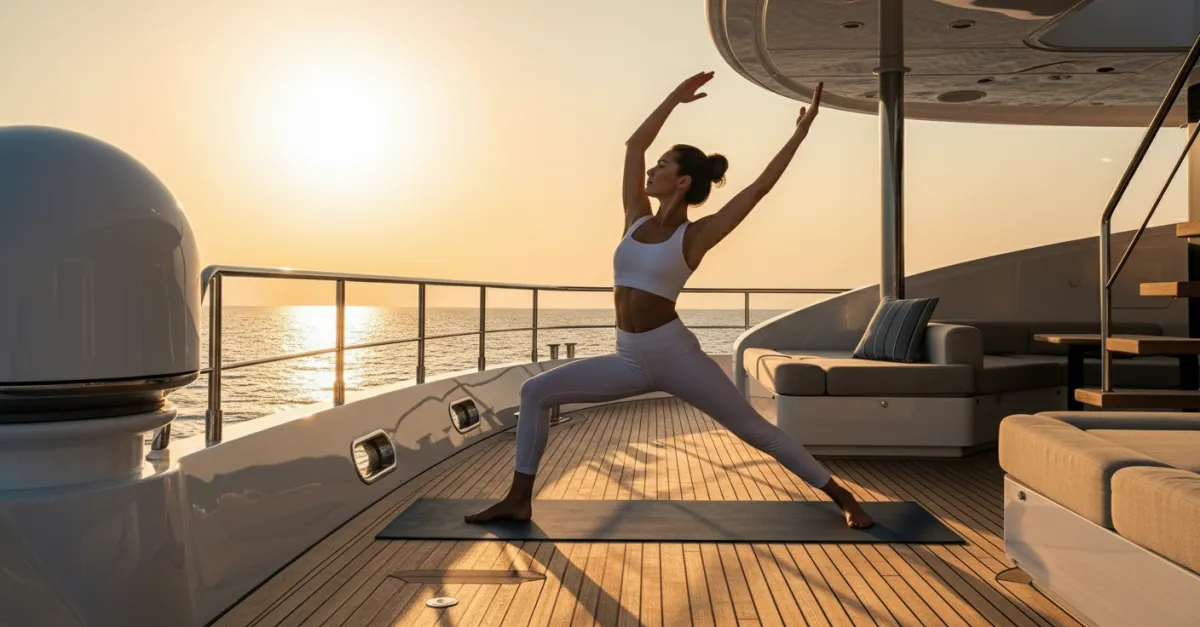
A private yacht charter puts your health routine in your own hands. You choose when to swim, when to rest and what to eat, but you are also responsible for sun, fluids and seasickness, and a boat is a long way from a clinic. This guide covers private gulet charters and motor yachts in Turkey and the Aegean. It is not about large cruise ships. If that is what you are comparing, read our Wellness Cruise guide.
How to prevent seasickness on a private charter
Seasickness is the most common health problem on a charter, and prevention works better than treatment. The NHS advises sitting in the middle of the boat, where movement is least, looking at a fixed point such as the horizon, and getting fresh air. Avoid heavy meals, spicy food and alcohol shortly before or during the trip.
Ginger is one option the NHS mentions, taken as a tablet, biscuit or tea. Pharmacies also sell motion sickness tablets, patches and acupressure bands, though acupressure bands do not work for everyone. Ask a pharmacist which remedy suits you or your children, and start it before you sail rather than after symptoms begin.
Sun protection on deck
Open-deck days are hard on skin, because sunlight reflects off the water and light-coloured surfaces. The NHS advises spending time in the shade between 11am and 3pm, covering up, and using sunscreen with at least SPF 30 and at least four-star UVA protection. Apply it about 30 minutes before going out, reapply every two hours, and reapply straight after swimming or towel drying.
Check the UV index on a weather app each morning. The World Health Organization developed the index to show when sun protection is needed. Wear a wide-brimmed hat and sunglasses with good UV protection, and keep babies under six months old out of direct sunlight.
Hydration and heat illness: what to do
Drink regularly through the day instead of waiting for thirst. The NHS suggests drinking enough that your urine stays a pale colour, and drinking more when it is hot or you are sweating. Water and diluted sugar-free squash are good choices, while caffeinated drinks and alcohol can add to dehydration.
Heat exhaustion usually does not need emergency help if the person can cool down within 30 minutes. Heatstroke is a medical emergency. The table below sets out the difference.
| Situation | Signs to look for | What to do |
|---|---|---|
| Heat exhaustion | Tiredness, dizziness, headache, nausea, heavy sweating, cramps, strong thirst | Move to a cool place, remove extra clothing, give water or oral rehydration solution, and cool the skin |
| Heatstroke | Very high temperature, hot skin without sweating, fast breathing, confusion, a fit or loss of consciousness | Call emergency services now (112 in Turkey) and keep cooling the person while you wait |
Fitness, swimming and yoga from the boat

Healthy Yacht Getaway?
Get wellness route suggestions and insider tips
Exercise early or late in the day to avoid the strongest heat, and rest in shade afterwards. Ask the crew before you book whether the boat has a gym, paddle boards or snorkelling gear, because equipment varies from boat to boat.
Swim from the stern only when the captain says it is safe. Ask about water depth, currents and the swim ladder before you go in, never swim alone, and get back on board if you feel cold, dizzy or tired. Yoga on deck works best at sunrise or in the evening, when the sun is lower.
Spa and massage on board

Some yachts and charter companies offer massage on request, but treatments depend on the boat, the crew and the itinerary, so ask well before departure. Tell the therapist about injuries, pregnancy, recent surgery or any condition that affects blood clotting before a treatment.
Book treatments for calmer parts of the day rather than straight after a long swim or a heavy meal, and drink water afterwards.
Food and water on board

Charter meals are often built around fresh fish, vegetables, olive oil and fruit, which suits a Mediterranean style of eating. Tell the crew about allergies, intolerances and medical diets when you book, so the galley can plan ahead rather than improvise on board.
Ask the crew which water is used for drinking and cooking, and keep a supply of bottled water in your cabin. Store perishable food in a cool place and do not leave it in direct sun on deck.
Medical preparedness and travel insurance
Before you sail, check that your travel insurance covers local treatment and unexpected medical evacuation, since a boat can be far from a hospital. The UK government advises this for Turkey, and notes that the European Health Insurance Card and the Global Health Insurance Card are not valid there.
Dial 112 for an ambulance, fire or police in Turkey. For a maritime emergency, the Turkish Coast Guard can be reached on 158. Ask the captain about the first-aid kit and how the boat keeps in touch with shore, and tell the crew about any medical condition before you leave the marina.
Bring enough of your regular medicines for the whole trip, along with your prescriptions. British prescriptions are not accepted in pharmacies in Turkey, and some medicines are controlled, so check the rules before you travel.
A simple health kit for a charter includes:
- Sunscreen of at least SPF 30 and a wide-brimmed hat
- Your regular medicines in their original packaging, with a copy of your prescriptions
- Seasickness remedies, bought from a pharmacy before you sail
- Oral rehydration sachets, which a pharmacist can recommend
- Plasters and any personal first-aid items
References
- NHS - "Motion sickness" https://www.nhs.uk/conditions/motion-sickness/
- NHS - "Sunscreen and sun safety" https://www.nhs.uk/live-well/seasonal-health/sunscreen-and-sun-safety/
- NHS - "Dehydration" https://www.nhs.uk/conditions/dehydration/
- NHS - "Heat exhaustion and heatstroke" https://www.nhs.uk/conditions/heat-exhaustion-heatstroke/
- GOV.UK (FCDO) - "Turkey travel advice: Health" https://www.gov.uk/foreign-travel-advice/turkey/health
- GOV.UK (FCDO) - "Turkey travel advice: Getting help" https://www.gov.uk/foreign-travel-advice/turkey/getting-help
- World Health Organization - "Radiation: The ultraviolet (UV) index" https://www.who.int/news-room/questions-and-answers/item/radiation-the-ultraviolet-(uv)-index
- 112 Emergency Call Center (Turkey) - "158 Sahil Güvenlik İhbarları 112 Acil Çağrı Merkezinde" https://www.112.gov.tr/bartin/158-sahil-guvenlik-ihbarlari-112-acil-cagri-merkezinde
This article was last updated on October 13, 2026.
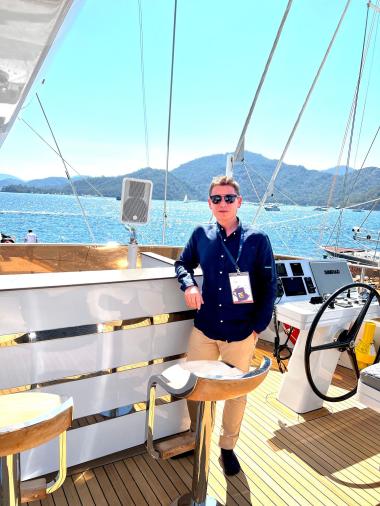
I have over ten years of experience in luxury yacht charters. I focus on creating amazing sailing experiences along the Turkish Riviera. As the CEO of De Yachting since 2010, I have managed many successful charters. I know Turkey's most beautiful coastal spots very well.
Areas of Expertise
Have questions about yacht chartering?
Feel free to reach out directly