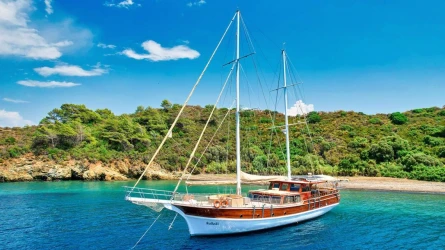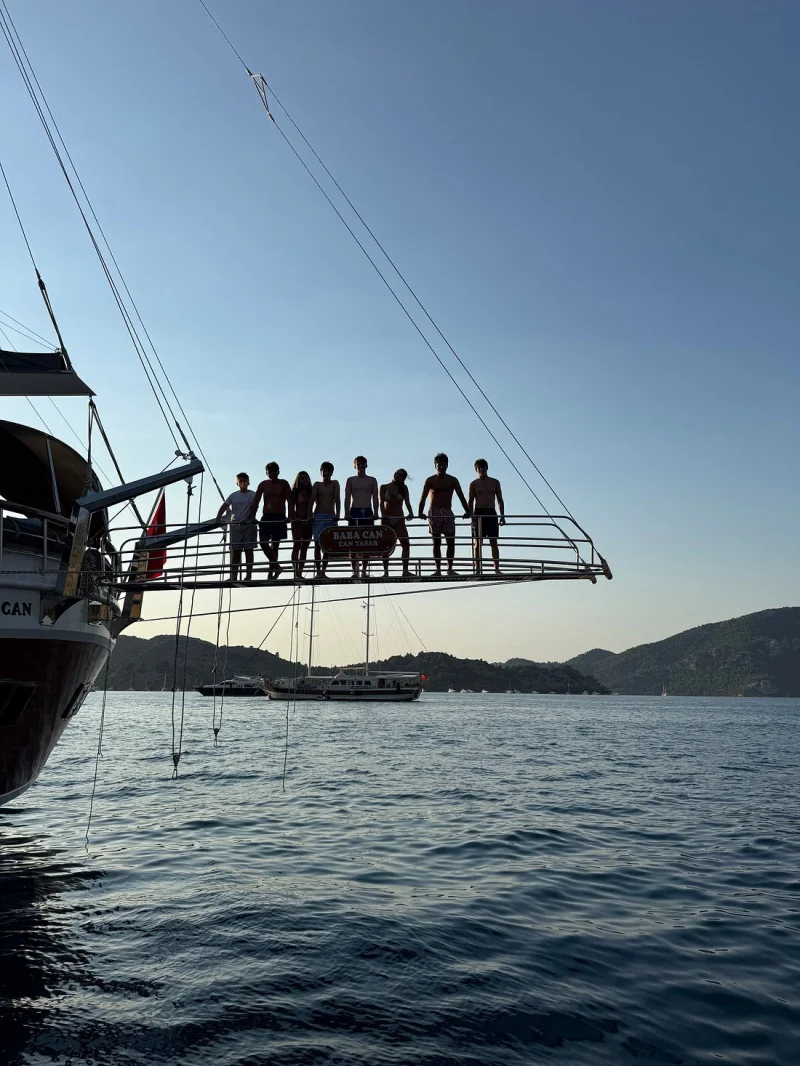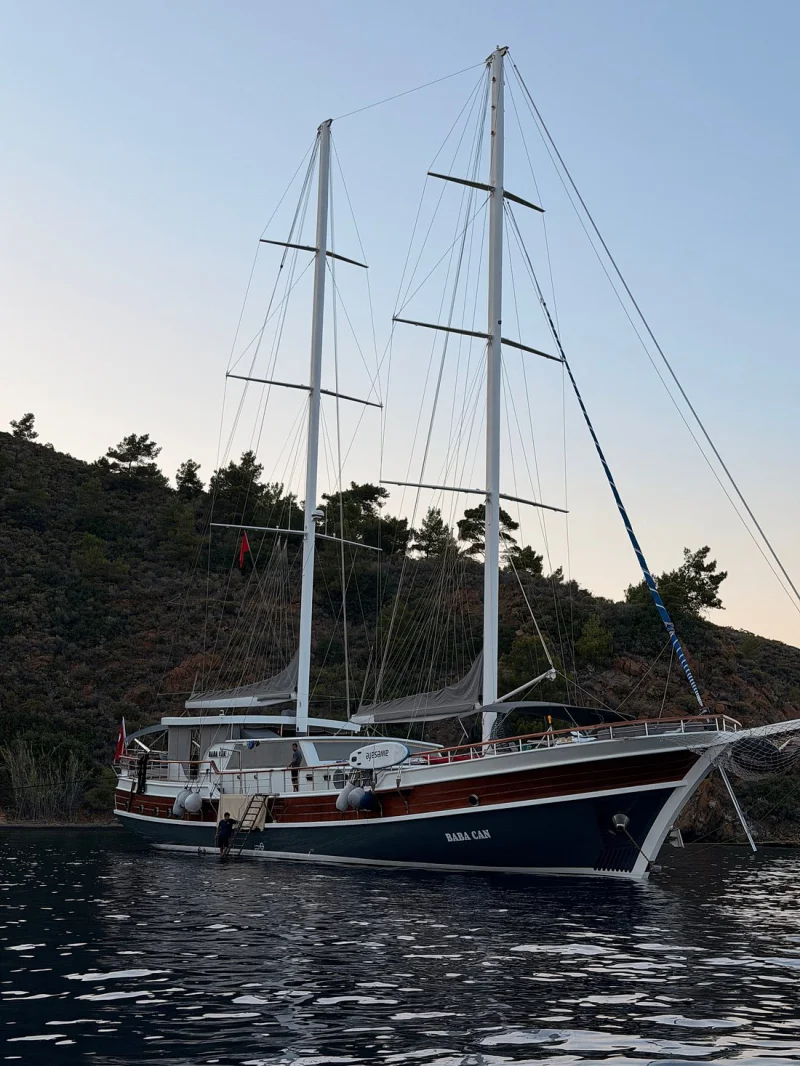


Most first-time guests assume a gulet charter works like an all-inclusive resort. Then the surprise charges start: “Wait… drinks are extra?” or “Why are Greek port fees on our bill?”
Here’s the clean truth: what’s included in a gulet charter depends on the pricing model written in your contract. In the Mediterranean you’ll usually see one of these two setups:
- Model A: All-inclusive charter fee (common on many Turkish gulets): meals + fuel + mooring in Turkish waters are bundled into the charter fee.
- Model B: Charter fee + APA (Advance Provisioning Allowance) (common in many international yacht charters): you pay a separate onboard budget for variable costs like food, fuel, port fees, and extras.
This guide shows both models and includes a real-world example clause set from a Turkish-flagged gulet contract (so you can compare it to yours).

Start Here: Find the “Charter Fee Include / Exclude” Section
If you only read one thing: open your agreement and locate the section that says “Charter fee include” and “The rate exclude.” That section is the source of truth — not blog posts, not assumptions, not what your friend paid last year.
In the example contract used for this guide, the charter fee includes: Turkish harbour/port procedures and taxes, full-board meals, transit log formalities, mooring expenses, ship water, diesel & gasoline, linens/towels, equipment use, and yacht insurance. Drinks and airport transfers are excluded, and Greek Islands taxes/harbour fees are excluded. (Your agreement may differ.)
Model A: What’s Included in an “All-Inclusive” Turkish Gulet Charter (Example)
On many Turkish private gulet charters, the “all-inclusive” model means the charter fee bundles most of the predictable operating costs in Turkish waters.
Typically included (based on the example contract):
Planning Your First Gulet Charter?
Get our complete gulet pricing guide. We'll break down inclusions, fees, and more for a surprise-free trip.
- The gulet + crew service (captain and crew, service onboard)
- Meals (full board): breakfast, lunch, tea time, and dinner
- Fuel: diesel & gasoline
- Water onboard: ship water
- Mooring expenses in Turkish waters (contract wording matters here)
- Transit Log & related formalities
- Turkish harbour/port procedures & taxes (charter/berth tax, port procedures in Turkish seas)
- Linens & towels
- Use of equipment onboard (as listed in the contract)
Typically excluded (based on the same example contract):
- Drinks (soft drinks and alcohol are usually the #1 surprise cost)
- Airport transfers
- Greek Islands taxes + harbour fees/formalities (if you cross into Greece)
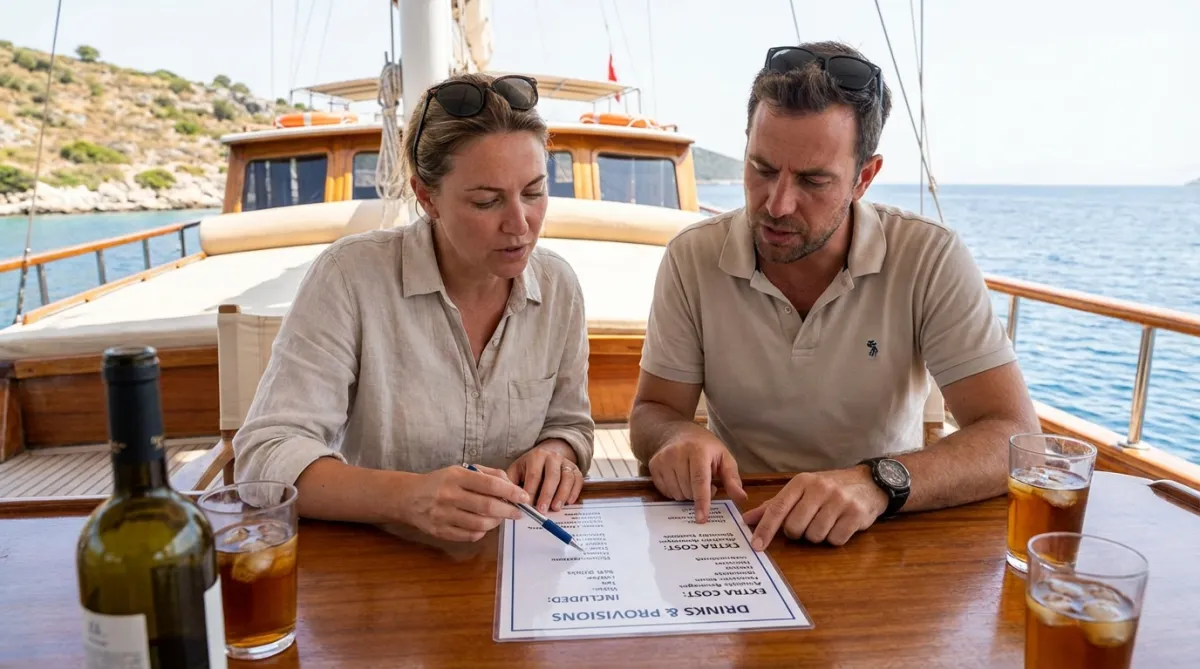
Model B: What’s Included When You Pay “Charter Fee + APA”
APA (Advance Provisioning Allowance) is a pre-funded onboard expense budget used in many yacht charters. It’s managed by the captain with receipts and reporting, and it typically covers variable costs such as food and beverages, fuel, port/marina fees, and requested extras. Any unused amount is refunded; if you exceed it, you top up.
This model can be excellent — it’s transparent and flexible — but only if you understand that “charter fee” is not the full trip cost. With APA, the charter fee often covers the yacht and crew; the variable operating spend is handled separately.
The 4-Hour Cruising Limit (Why It Matters Even When Fuel Is Included)
Many gulet contracts limit “time under way” to an average number of hours per day (a common figure is 4 hours/day). In the example agreement, cruising time is restricted to an average of four (4) hours per day unless the captain agrees to exceed it.
Practical impact:
- It shapes your route planning. Ambitious long-distance hops may not fit the daily cruising cap.
- It affects expectations more than cost. Even if fuel is included, the agreement may still limit engine hours to protect the schedule and comfort.
- Always confirm in writing if you need longer passages (and ask if anything changes financially under your specific contract).
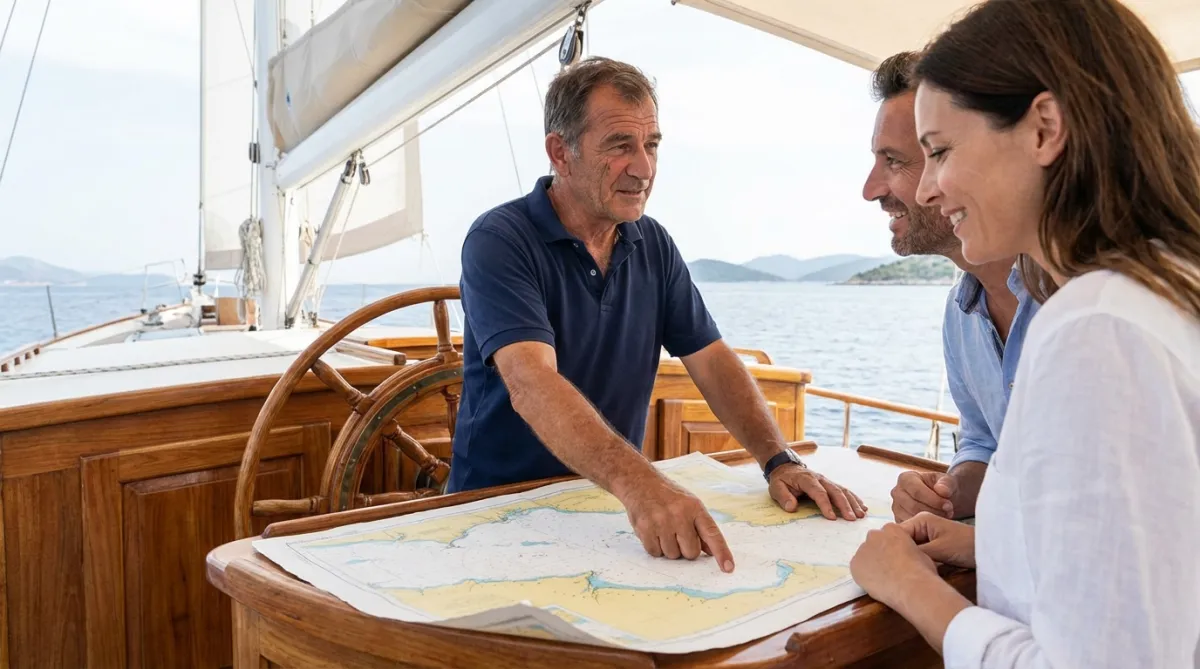
Drinks: The Most Common Surprise
In many Turkish gulet contracts, drinks are excluded even when meals are included. That means:
- Water may be available onboard (ship water), but soft drinks and alcohol are usually extra.
- Some yachts allow BYO alcohol; some don’t. Always ask.
- Confirm how drink costs are settled: fixed packages, pay-as-you-go, or an onboard bar tab.
Turkey vs. Greek Islands: Different Cost Rules
Staying in Turkish waters is typically simpler: your Turkish contract may bundle many operating costs locally (depending on the “include” list). But the moment you cross into Greece, additional items often appear:
- Greek Islands taxes
- Harbour fees, formalities, agents, and handling expenses
So if your itinerary includes Greek islands, ask for a clear “Turkey-only” vs “Turkey + Greece” cost explanation before you pay.
Inclusions Matrix (At a Glance)
| Item | Model A: All-inclusive Turkey Contract (Example) | Model B: Charter Fee + APA |
|---|---|---|
| Yacht + crew | Included | Included |
| Meals | Included (full board in the example) | Paid from APA |
| Fuel | Included (diesel & gasoline in the example) | Paid from APA |
| Mooring / marina costs in Turkish waters | Included (as written in the example) | Paid from APA |
| Drinks (soft drinks & alcohol) | Excluded (in the example) | Paid from APA |
| Airport transfers | Excluded (in the example) | Usually excluded |
| Greek Islands taxes + harbour fees/formalities | Excluded (in the example) | Paid from APA (or billed separately) |
| Cruising time limit (e.g., 4 hrs/day) | Usually written into the contract (route expectation control) | Often still applies (check agreement) |
| Crew gratuity | Not included (customary, discretionary) | Not included (customary, discretionary) |
Cabin Charter vs. Private Charter (Different Inclusion Rules)
The inclusions above are mainly about private charter (you book the entire gulet). Cabin charters (you book 1–2 cabins on a shared boat) often include more as a bundle, because the operator controls provisioning and schedules. The tradeoff is less flexibility on routing and mealtimes.
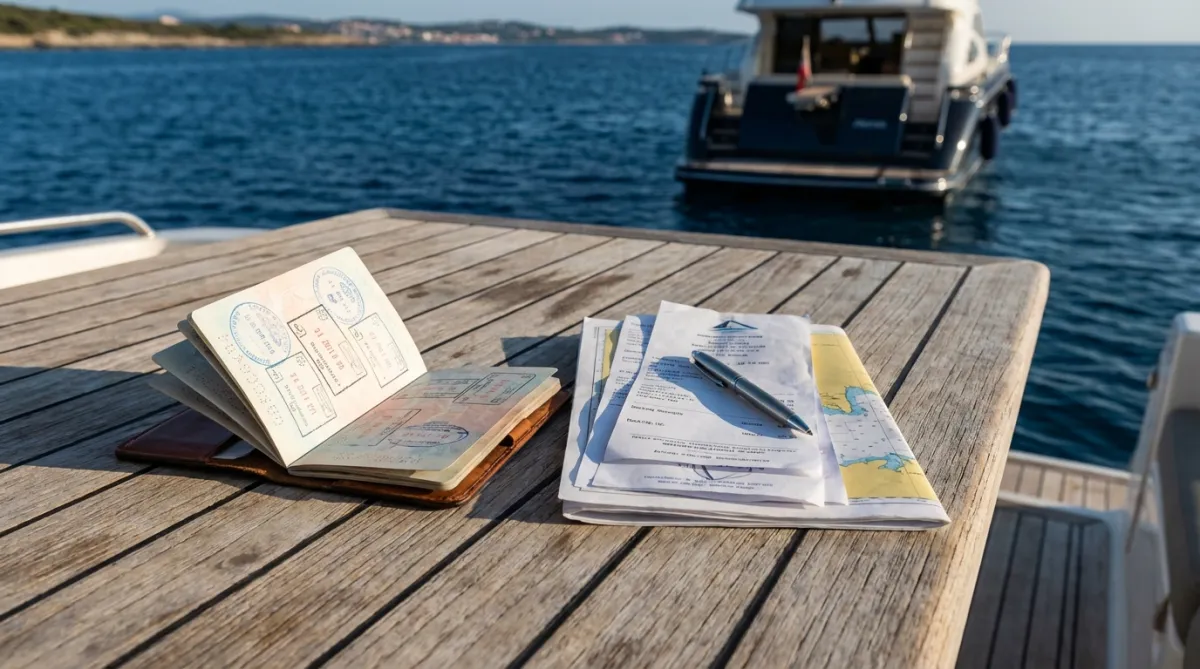
The “Ask Before Booking” Checklist (Copy/Paste)
- Is our contract all-inclusive, or charter fee + APA?
- Are meals included? If yes: which meals (full-board or half-board)?
- Are drinks included? If not: how are they charged (package, bar tab, BYO allowed)?
- Is fuel included? If yes, is there a daily cruising hour limit?
- Are mooring/marina costs included in Turkey? What changes if we choose marinas every night?
- If we go to Greece: which taxes/harbour fees/agent costs are extra and roughly how much?
- Is crew gratuity expected, and what range is customary for your region?
- Who manages shopping/provisioning (crew-led with receipts vs. pre-approved list)?
Bottom line: A gulet charter is great value when you understand the model written in your agreement. If you match your expectations to the “include/exclude” list and clarify drinks + Greece costs up front, the only surprises you’ll get are the good kind.
References
- Republic of Türkiye Ministry of Culture and Tourism – Yacht Registration Form (Transit Log) – Official overview of the Transit Log concept in Türkiye.
- Turkish Marine Tourism Association – Useful Information (Transit Log) – Industry association explanation of Transit Log purpose/validity.
- MYBA – Information for Charter Yacht Captains & Crew (APA & Reporting of Charter Accounts) – Operational handling and reporting expectations for APA.
- Wikipedia – Advance Provisioning Allowance (APA) – High-level definition and how APA is administered.
- Boat International – Superyacht Charter Tipping Guide – Widely cited gratuity ranges and regional norms.
- Republic of Türkiye Ministry of Transport & Infrastructure (Port Authority) – Transit-Log Application – Official portal reference for Transit-Log related procedures.
This article was published on February 26, 2026.
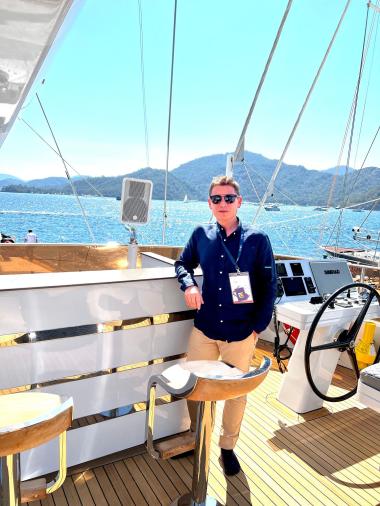
I have over ten years of experience in luxury yacht charters. I focus on creating amazing sailing experiences along the Turkish Riviera. As the CEO of De Yachting since 2010, I have managed many successful charters. I know Turkey's most beautiful coastal spots very well.
Areas of Expertise
Have questions about yacht chartering?
Feel free to reach out directly