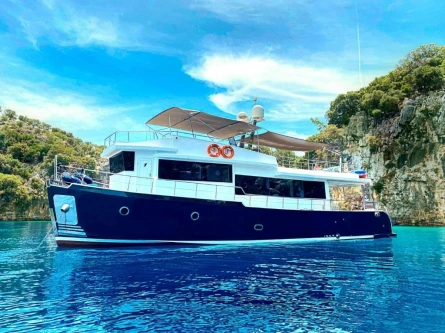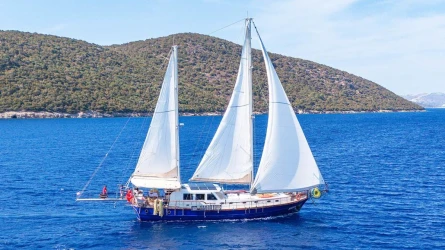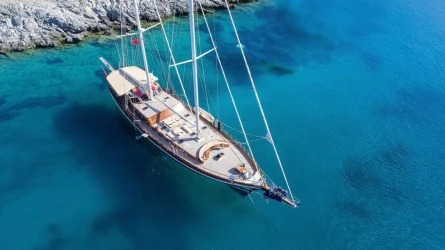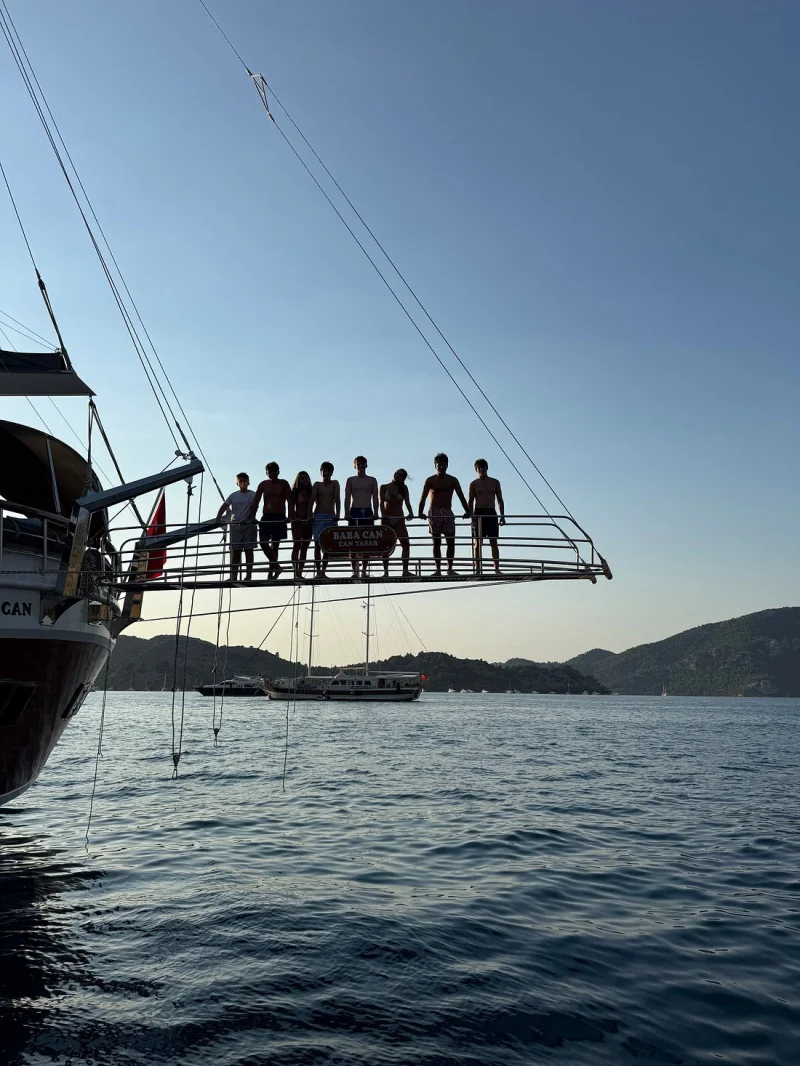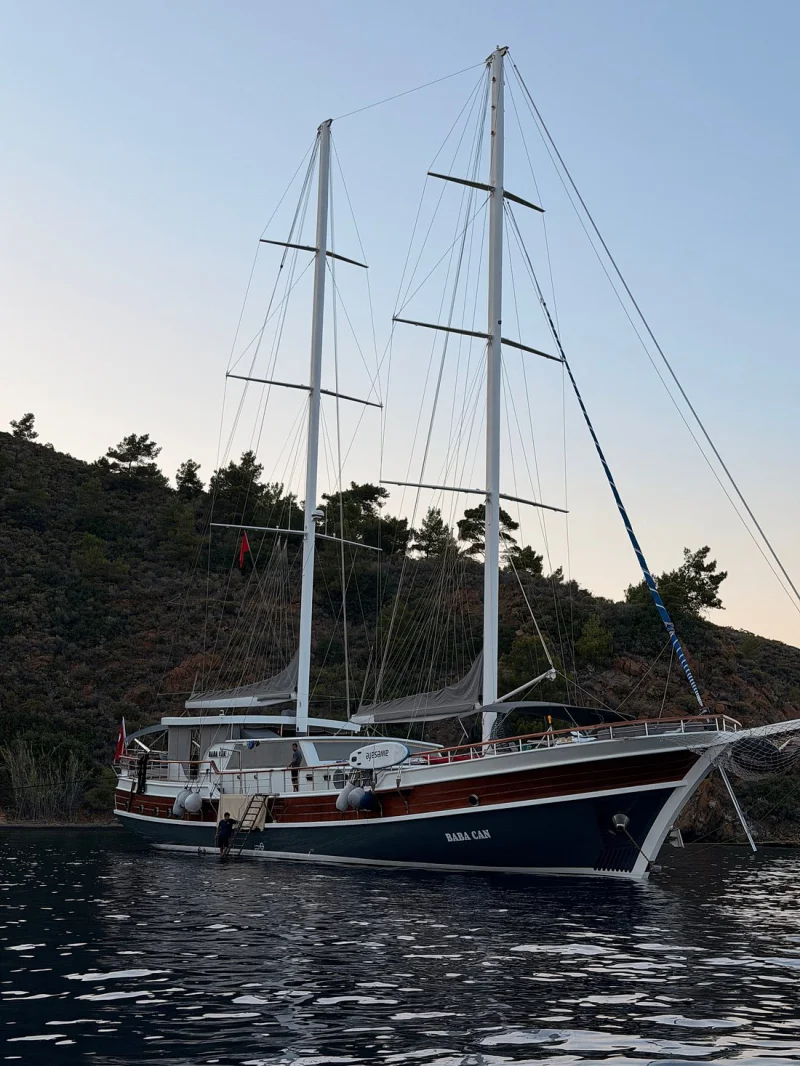

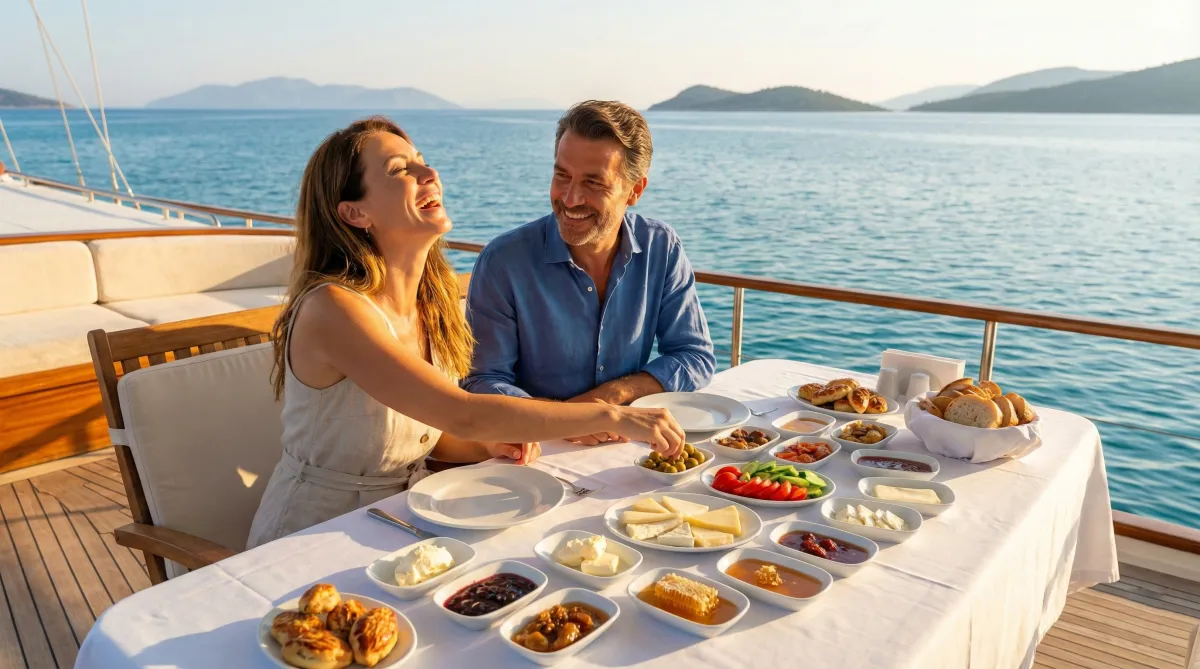
Traditional wooden vessels offer 4-8 cabins with crew, and the chef onboard prepares three daily meals using local produce. Most gulet food comes from morning markets in Turkish coastal towns, with menus shifting based on what's fresh that day. Half-board packages cover breakfast and lunch, while full-board adds dinner—though most charters now lean toward all-inclusive for simplicity.
Here's what surprised us over 15 seasons: guests worry about food quality before booking, then spend the week asking for recipe cards. The gulet food menu isn't fancy restaurant fare. It's home-style Turkish cooking with Mediterranean ingredients, prepared in a galley smaller than your bathroom.
What Actually Appears at Breakfast
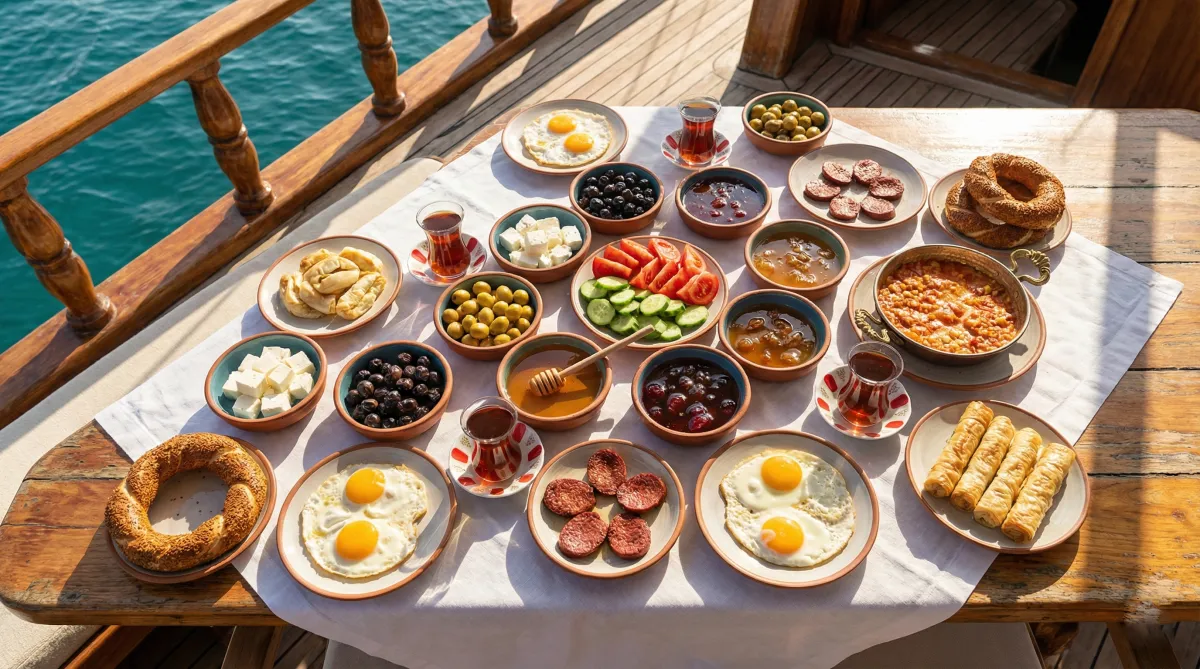
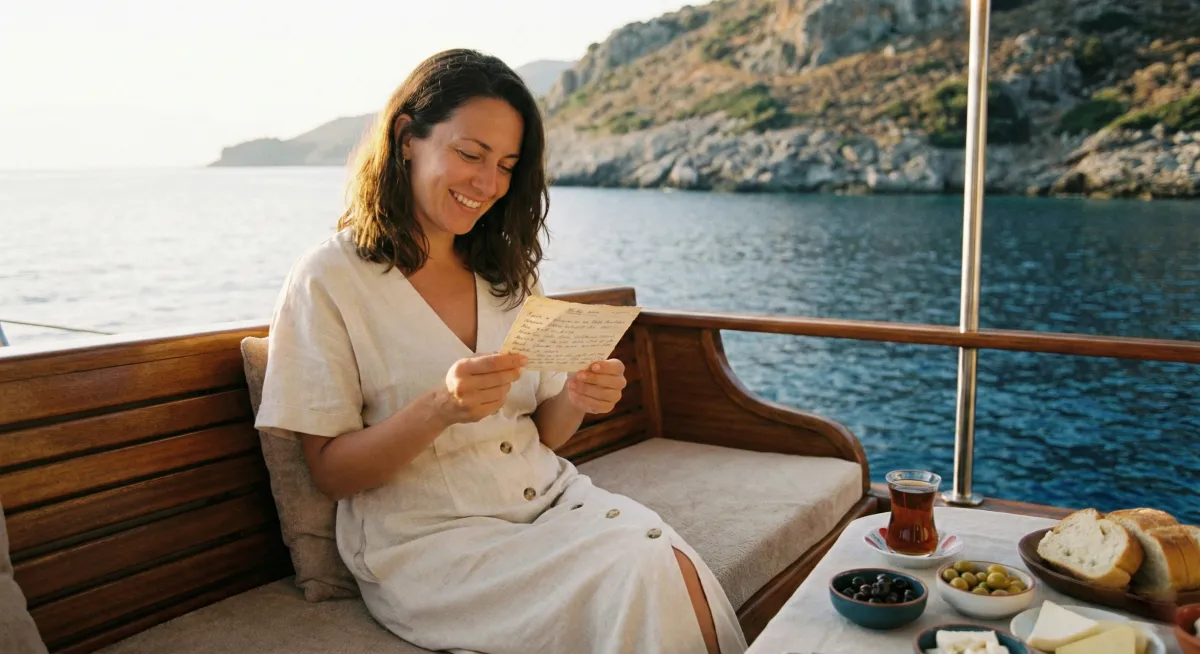
Turkish breakfast spreads take over the entire deck table. We're talking 15-20 small dishes appearing around 9am, staying out until 11am for late risers.
The standard setup includes white cheese (beyaz peynir), olives in three colors, tomatoes, cucumbers, fresh bread, honey, homemade jams, butter, eggs cooked to order, sucuk (spicy sausage), and börek (cheese pastry). Most gulets add menemen (Turkish scrambled eggs with peppers), fresh fruit, yogurt, and tahini-molasses mix.
Coffee comes Turkish-style or instant Nescafe. Some gulets now carry proper espresso machines after enough requests, but don't count on it. Tea flows constantly—black çay in tulip glasses, served every hour.
What guides rarely mention: this breakfast keeps you full until 2pm easily. Guests often skip lunch plans because they're still working through breakfast calories. The cheese alone comes in four varieties on better charters.
Experience Authentic Gulet Dining
Traditional wooden craft, private chef, and fresh market-to-table Turkish hospitality.
Lunch on the Water
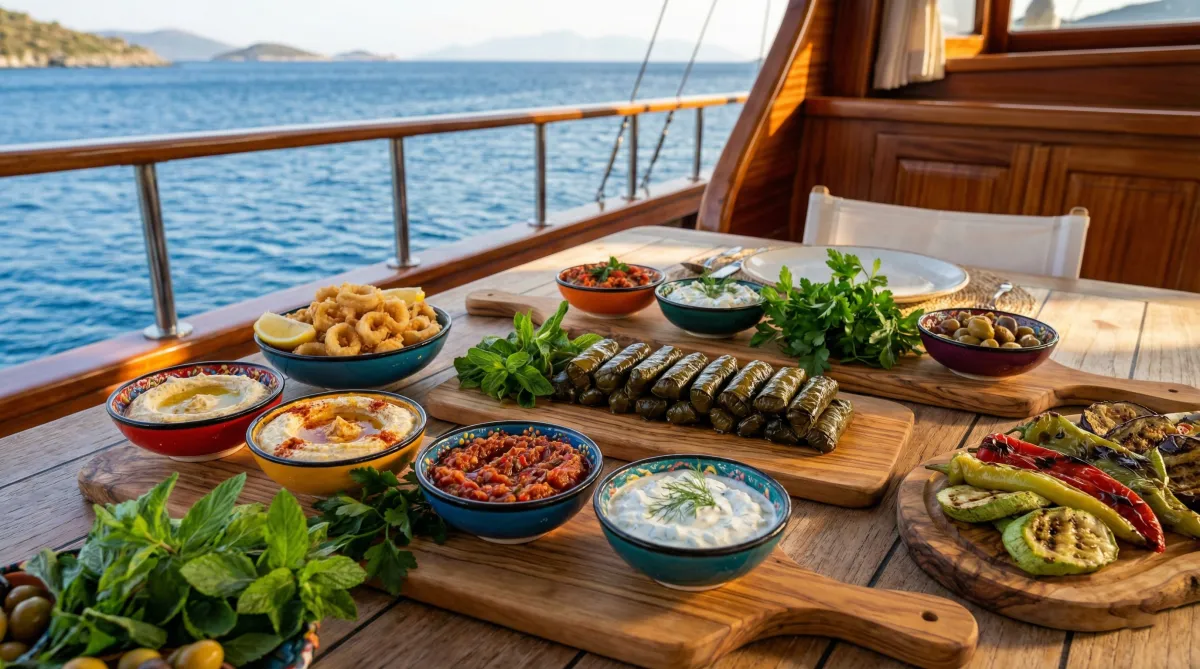
Most gulet charters serve lunch between 1pm and 3pm, timing it after a swimming stop. The yacht chef menu for midday leans heavily on mezze—those small Turkish appetizers that somehow become a full meal.
Expect hummus, ezme (spicy tomato-pepper paste), haydari (thick yogurt with herbs), stuffed vine leaves, fried calamari, and seasonal salads. Fresh fish appears 3-4 times weekly, grilled whole and served family-style. Chicken or köfte (meatballs) fill the non-fish days.
Pasta shows up once per week, usually as a guest-pleaser for kids. Rice pilaf or bulgur accompanies most meals. Vegetables get grilled, roasted, or turned into stews.
Here's the thing about portions: Turkish hospitality means too much food. Chefs prepare for 12 even when feeding 8. Leftovers become next day's appetizers or crew meals—nothing gets wasted on food on gulet Turkey charters.
The Deck BBQ Ritual
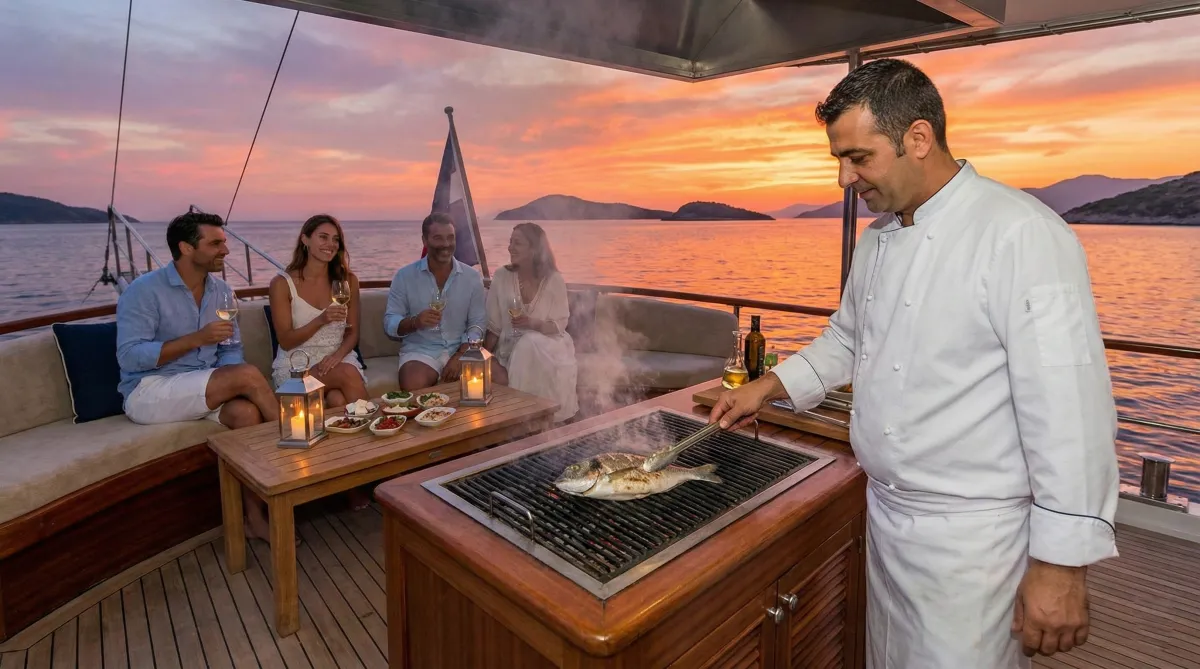
BBQ on deck happens 2-3 times per week, weather permitting. The captain picks an isolated bay, crew sets up the charcoal grill on the swim platform, and everyone gathers around 8pm.
Fresh fish dominates these evenings. Sea bass, sea bream, or whatever looked best at morning market gets grilled whole with lemon and olive oil. Lamb chops appear on meat nights. Vegetables—peppers, eggplant, tomatoes—char alongside the protein.
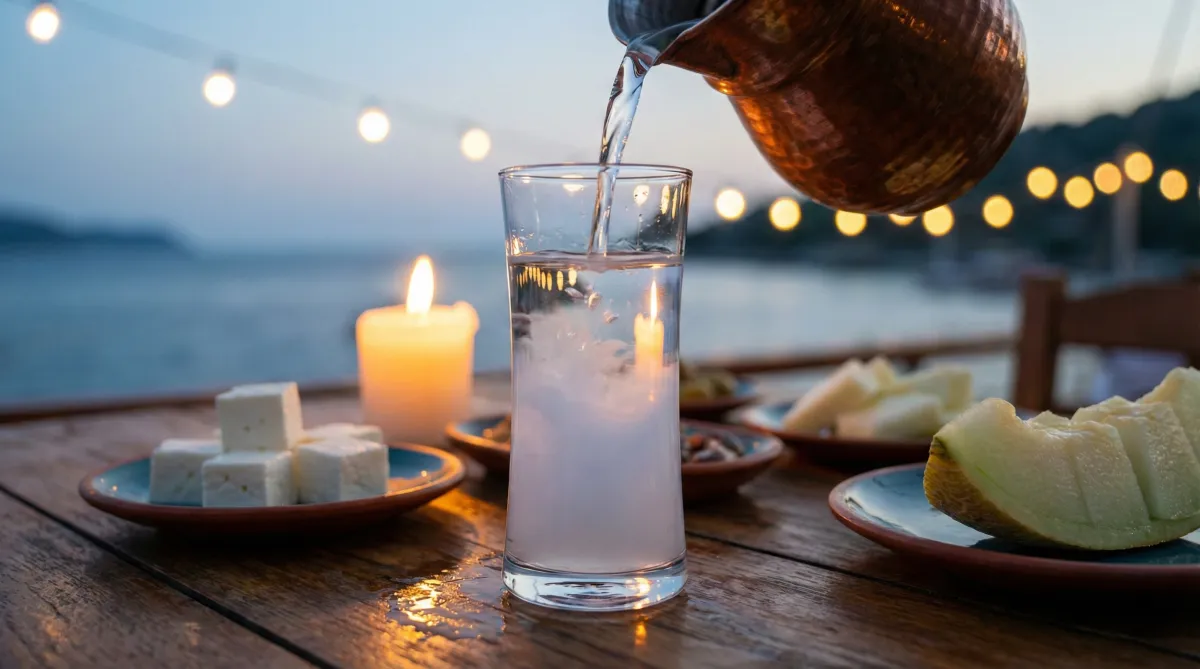
Mezze starters still appear (Turks don't skip appetizers), followed by the grilled main course, then fruit for dessert. Watermelon and melon get served ice-cold from deck coolers.
What most guides miss: these BBQ nights run late. Dinner stretches to 10pm or 11pm with raki flowing and conversation building. It's the social peak of any gulet cruise Turkey experience, not just a meal.
The crew eats separately but from the same food. No separate "staff meals"—everyone gets identical quality, just different timing.
Dietary Requirements Reality Check
Vegetarian options work easily on Turkish gulet charters. The cuisine already includes dozens of vegetable-based mezze, grain dishes, and salads. Chefs simply skip the meat courses and double up on alternatives.
Vegan options require advance notice but aren't problematic. Turkish cooking uses olive oil heavily (not butter), and most mezze naturally fall vegan. The challenge comes at breakfast with cheese and yogurt being staples—chefs need time to source alternatives.
Gluten-free gets trickier. Bread appears at every meal, bulgur shows up regularly, and many mezze contain wheat. Better gulet charters stock gluten-free bread and pasta, but selection stays limited. Remote bays don't have specialty stores nearby.
Allergies need clear communication at booking. Nut allergies, seafood allergies, lactose intolerance—whatever it is, mention it twice. Once in the booking form, again directly to the crew before departure. Turkish hospitality means they'll accommodate anything with proper notice, but last-minute requests in a small galley create stress.
We've seen guests go fully vegan, kosher-style, and low-carb successfully. The key: detailed conversation before the charter starts, not surprises on day one.
What's Actually Included
Half-board covers breakfast and lunch only. You're on your own for dinner, which sounds fine until you realize you're anchored in an empty bay with no restaurants in sight. Most guests upgrade to full-board within two days.
Full-board adds dinner but typically excludes alcohol. Expect three meals daily plus afternoon tea with cookies or cake around 5pm. Soft drinks usually fall under full-board, but check your contract—some gulets charge separately.
All-inclusive packages cover everything: three meals, snacks, soft drinks, local alcohol (beer, wine, raki), and sometimes basic cocktails. The alcohol quality varies wildly. Budget gulets serve whatever's cheapest. Better charters stock decent Turkish wines and premium raki.
APA (Advance Provisioning Allowance) changes the game entirely. You pay 25-35% extra upfront, crew buys exactly what you request, and you settle the actual costs at week's end. Want French wine? Premium steaks? Specific brands? APA makes it happen.
Worth knowing: all-inclusive sounds convenient but limits choice. With APA, you control the menu completely. Families with picky eaters often prefer APA. Groups who drink heavily definitely prefer it—all-inclusive alcohol runs out or gets rationed on longer charters.
| Package Type | Meals Included | Drinks Included | Best For |
|---|---|---|---|
| Half-Board | Breakfast + Lunch | Tea, water only | Port-hopping routes, restaurant seekers |
| Full-Board | Breakfast + Lunch + Dinner | Tea, water, soft drinks | Families, budget-conscious groups |
| All-Inclusive | 3 meals + afternoon tea + snacks | Soft drinks, local beer, wine, raki | Convenience seekers, moderate drinkers |
| APA (Advance Provisioning) | Custom menu to your specifications | Premium selections available | Foodies, heavy drinkers, specific diets |
The Chef's Market Routine
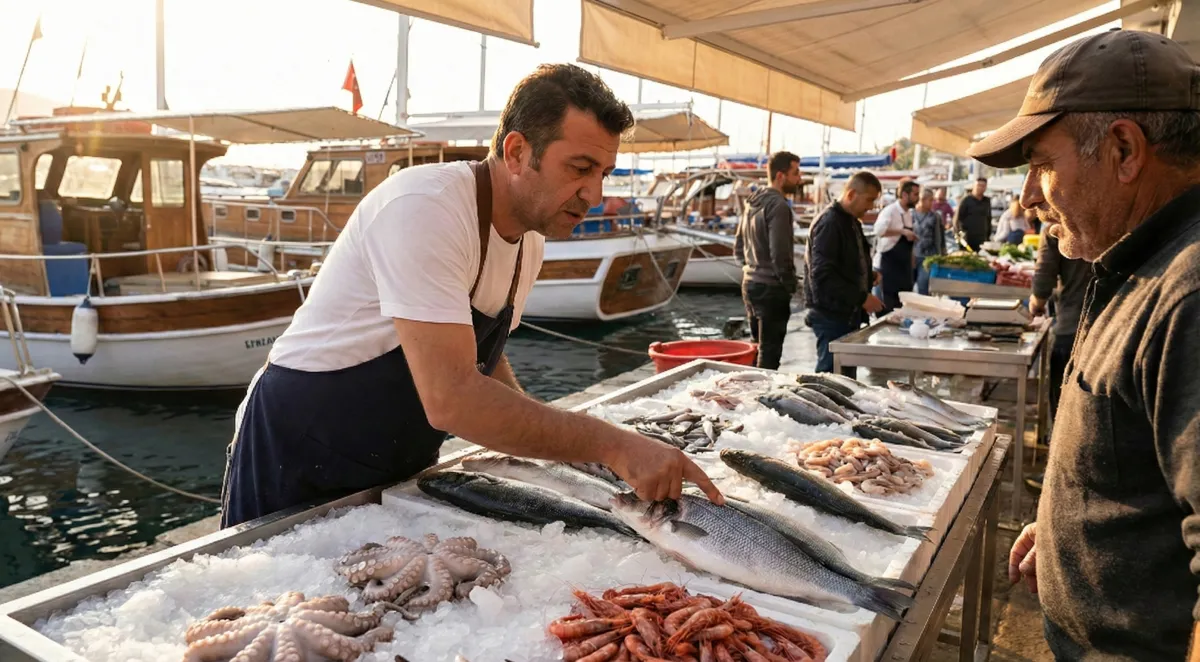
Most gulet chefs hit local markets between 6am and 8am, before guests wake. They buy fish directly from fishermen, vegetables from farmers, bread from bakeries. Everything arrives on deck by 9am for breakfast prep.
This daily shopping explains why menus stay flexible. The chef plans general themes but adjusts based on what looks good that morning. Sea bass was planned but red mullet looked better? Menu changes. Tomatoes are perfect? Expect tomato-heavy mezze.
Remote routes make this harder. Some Turkish Riviera stretches have limited provisioning stops. Chefs stock up heavily before isolated sections, relying on onboard refrigeration for 3-4 days. Menus get simpler during these stretches—fewer fresh options, more preserved ingredients.
Better gulet charters give you the chef's phone number pre-trip. You can discuss preferences, flag allergies again, even request specific dishes. Some chefs send proposed weekly menus for approval. This rarely happens on budget charters where the menu stays standard.
Wine, Raki, and Drinking Culture
Turkish wine quality jumped dramatically in the past decade. Expect Kalecik Karası reds and Narince whites on better gulets. Budget charters serve basic Kavaklidere or Doluca—drinkable but forgettable.
Raki deserves its own paragraph. This anise-flavored spirit turns milky white with water, gets sipped slowly with mezze, and defines Turkish dining culture. All-inclusive packages include it, but quality varies. Premium raki (Yeni Rakı, Tekirdağ) costs more—worth requesting via APA if you care.
Beer flows easily. Efes dominates, with Tuborg as backup. Some gulets stock imported beers for extra cost. Cocktails depend entirely on the crew's bartending skills and available ingredients. Simple classics work (gin and tonic, rum and coke), but don't expect craft cocktails.
Here's what charter operators rarely mention: Turkish drinking culture emphasizes slow consumption with food. The crew won't judge heavy drinking, but they'll worry if you're pounding drinks without eating. It's a hospitality thing—they want you fed and happy, not seasick and miserable.
Alcohol consumption patterns we've noticed: couples drink moderately throughout the week, friend groups front-load the drinking in days 1-3 then slow down, families barely touch it except parents after kids sleep.
What Never Appears
Sushi doesn't happen. Raw fish on a boat without proper refrigeration? Turkish chefs won't risk it. Some modern gulets with excellent cold storage might attempt it, but it's rare and risky.
Beef stays uncommon. Turkey's cuisine centers on lamb, chicken, and fish. Beef costs more and doesn't fit traditional recipes. If you need beef, communicate it early via APA.
Exotic fruits and vegetables don't make the cut. You'll get Mediterranean staples—tomatoes, peppers, eggplant, zucchini, cucumbers. Avocados appear occasionally. Mangoes, papayas, dragon fruit? Not happening unless you're on a luxury gulet charter with serious budget.
Processed foods stay minimal. No frozen dinners, no pre-made sauces, no shortcuts. Everything gets prepared from scratch in that tiny galley. This explains why gulet food tastes better than expected—it's actual cooking, not reheating.
Desserts stay simple. Fresh fruit dominates. Occasional baklava appears. Some chefs make sütlaç (rice pudding) or kazandibi (caramelized milk pudding). Don't expect elaborate cakes or pastries—the galley lacks proper baking equipment.
Real Cost Breakdown
Budget gulet charters (€8,000-€10,000 weekly for 6-8 guests) include basic full-board. Food quality stays acceptable but not memorable. Expect simple mezze, standard proteins, local wine if all-inclusive.
Mid-range charters (€10,000-€20,000 weekly) step up ingredient quality noticeably. Better fish, more variety in mezze, decent wine selection, professional chef rather than crew member who cooks.
Luxury gulet charter options (€20,000-€50,000+ weekly) bring restaurant-quality meals. Chefs often have formal training, menus get customized completely, premium ingredients appear regularly, wine lists include French and Italian bottles.
APA typically adds €150-€300 per person weekly, depending on your requests. Heavy drinkers and picky eaters push toward the high end. Modest eaters and light drinkers stay lower.
Provisioning for special occasions—birthday cakes, champagne, specific celebration meals—adds €100-€500 depending on complexity. Mention these early; remote bays can't accommodate last-minute requests.
| Charter Tier | Weekly Price (6-8 guests) | Food Quality | Chef Level |
|---|---|---|---|
| Budget | €8,000 – €10,000 | Basic full-board, acceptable quality | Crew member who cooks |
| Mid-Range | €10,000 – €20,000 | Better fish, varied mezze, decent wine | Professional chef |
| Luxury | €20,000 – €50,000+ | Restaurant-quality, premium ingredients | Formally trained chef |
| APA Add-on | +€150-€300 per person | Custom menu to specifications | Same chef, better provisions |
The Practical Reality
Gulet food works because it's simple, fresh, and abundant. You won't get Michelin-star creativity, but you'll eat better than most resort buffets. The ingredients come from morning markets, preparation happens in real-time, and portions ensure nobody goes hungry.
Dietary restrictions get handled with advance notice and clear communication. The Turkish cuisine naturally accommodates vegetarians easily, vegans with some adjustment, and other requirements with proper planning.
Alcohol inclusion depends on your package choice. All-inclusive offers convenience, APA offers control, half-board offers flexibility to provision yourself. Match the choice to your group's drinking habits and food preferences.
The chef's daily market runs mean menus stay flexible and seasonal. This unpredictability bothers some guests but delights others. If you need rigid menu control, APA provisioning solves it. If you enjoy culinary surprises, standard packages work fine.
After 15 years watching guests board worried about food and disembark asking for recipes, here's the key insight: gulet food quality exceeds expectations because it's real cooking with fresh ingredients in a culture that values hospitality. The galley might be tiny, but the results consistently surprise first-time charterers.
References
- MYBA – The Worldwide Yachting Association – Industry standards for yacht charter agreements and provisioning allowances (APA).
- UNESCO – Mediterranean Diet Intangible Cultural Heritage – Recognition of Mediterranean culinary traditions including fresh ingredients, olive oil, and communal dining.
- Blue Flag Programme – Foundation for Environmental Education – Environmental standards for marinas and coastal tourism operations in Turkey.
- Turkish Marine Tourism Association (Deniz Turizm Birliği) – Official association for yacht tourism operators and marinas in Turkey.
- Turkish Ministry of Agriculture and Forestry – General Directorate of Food and Control – Official food safety and control authority relevant to catering, provisioning, and hygiene standards in Türkiye.
This article was published on January 15, 2026.
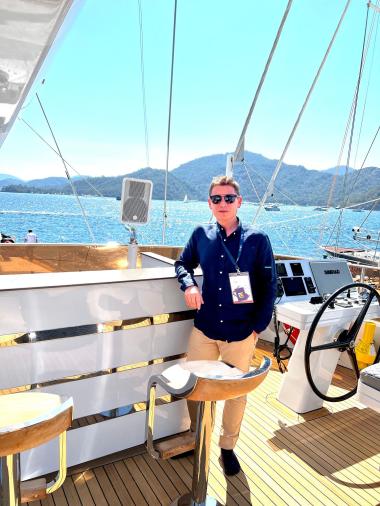
I have over ten years of experience in luxury yacht charters. I focus on creating amazing sailing experiences along the Turkish Riviera. As the CEO of De Yachting since 2010, I have managed many successful charters. I know Turkey's most beautiful coastal spots very well.
Areas of Expertise
Have questions about yacht chartering?
Feel free to reach out directly