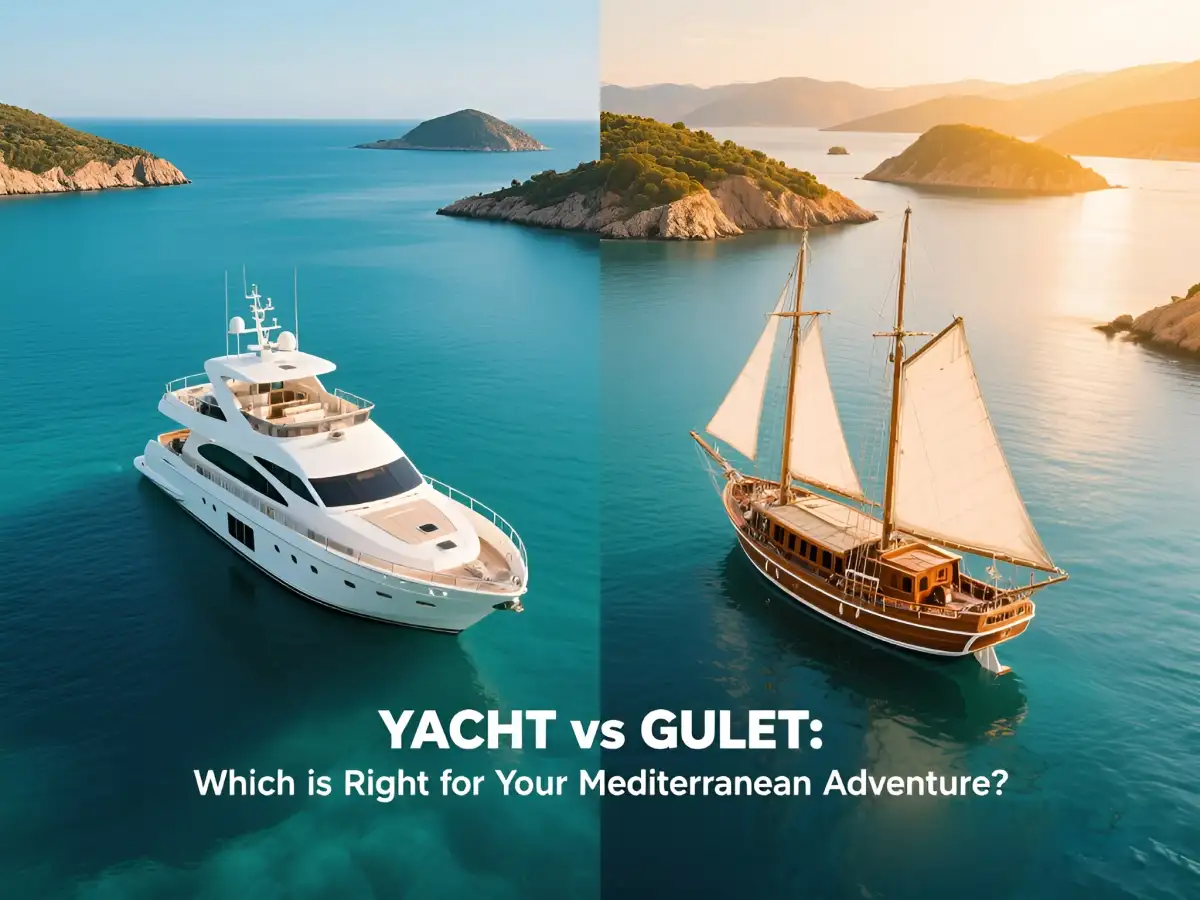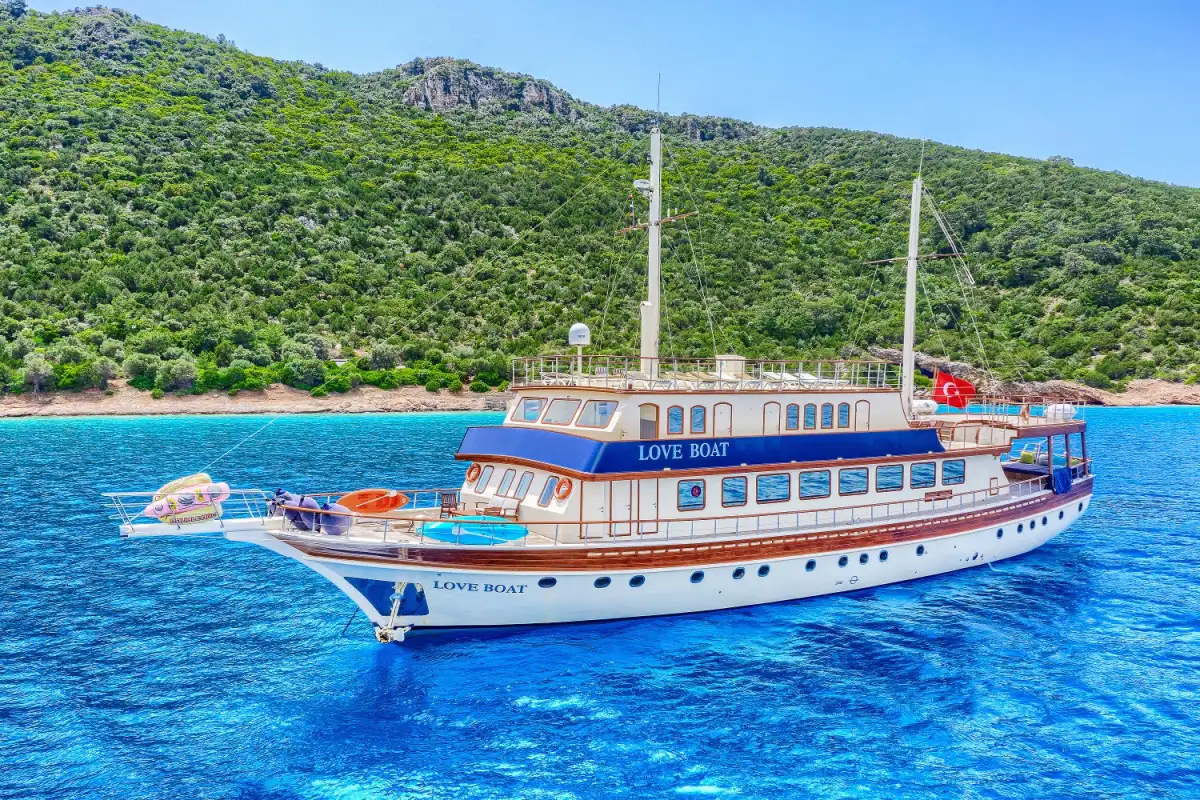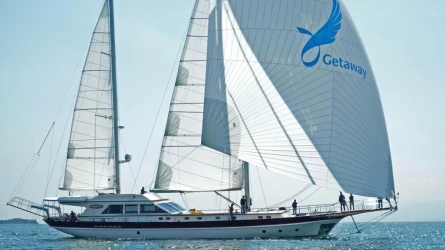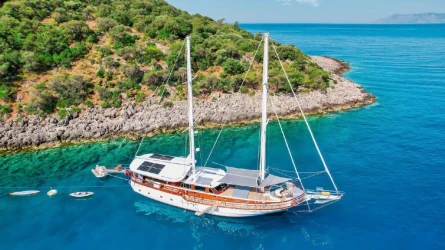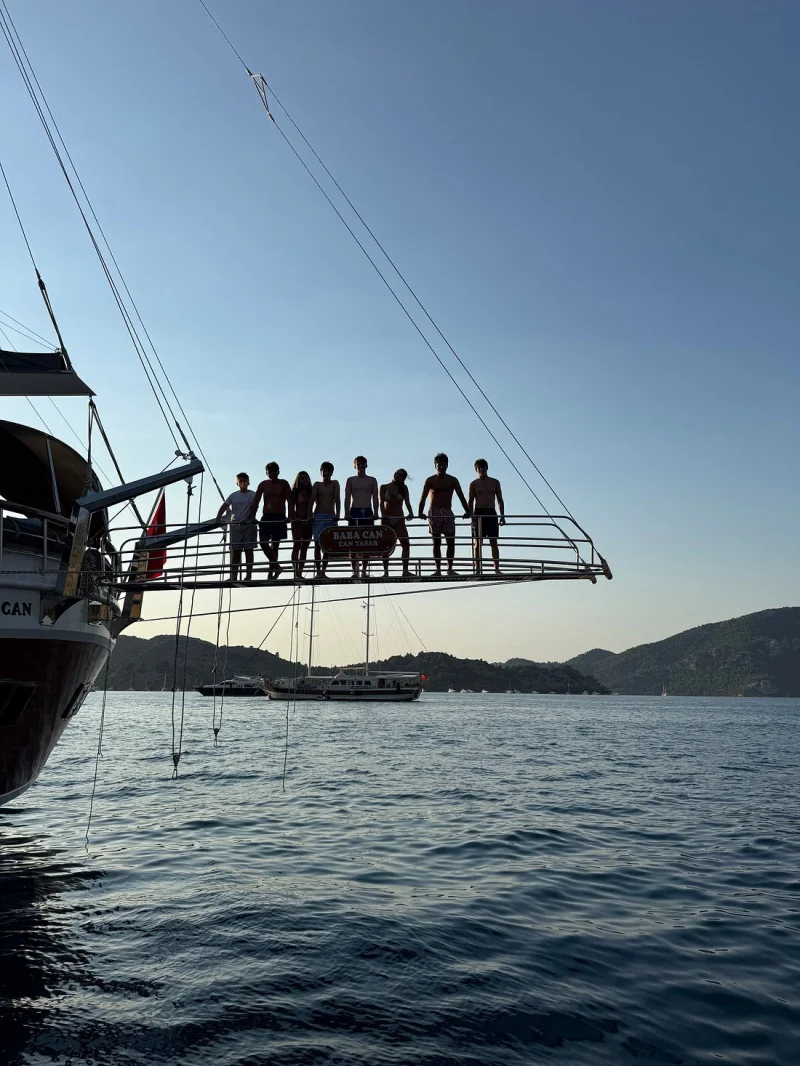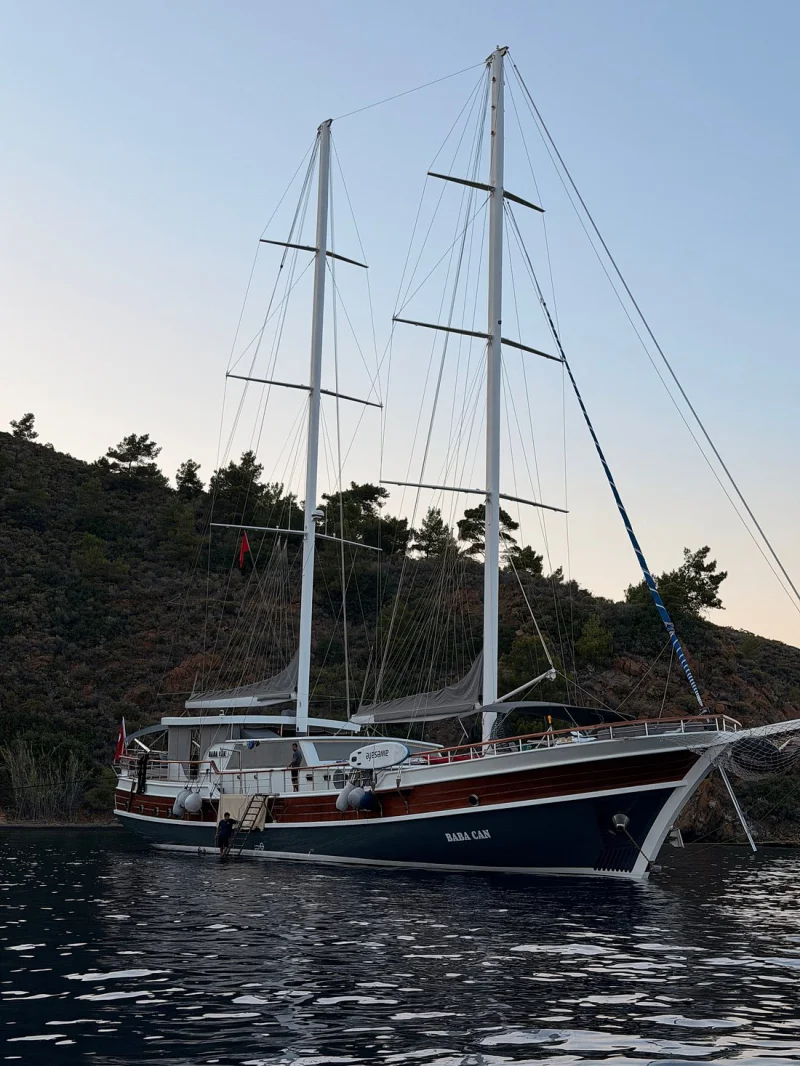

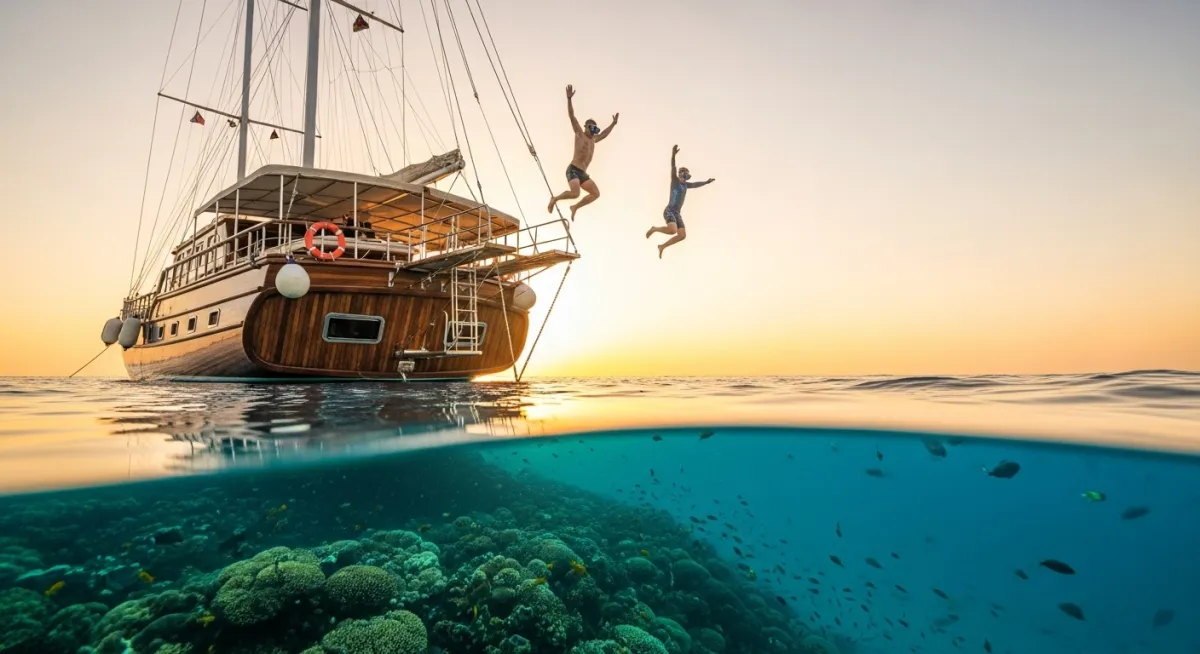
Gulet diving in Turkey combines accommodation, coastal travel and access to dive sites from the same vessel. The quality of the trip depends on the actual gulet, the diving operator, the route, the weather, the group's certification and the services included in the contract. Treat the itinerary as conditional rather than guaranteed.
A gulet can reduce daily transfers between a berth and a dive site, but it is not automatically a dedicated dive boat. Confirm the dive platform, boarding arrangement, equipment storage, compressor or cylinder service, freshwater rinsing, shaded areas and emergency plan before booking.
Turkey's Aegean and Mediterranean coasts include boat dives, wrecks, caves, walls and marine habitats. Site depth, visibility, current, access and protection rules change by location and day. A qualified local operator should match each dive to the diver's training and current conditions.
Why Choose Gulet Diving?
A gulet charter can let a group sleep on the same vessel used for coastal travel and spend less time repositioning between selected sites. The benefit is logistical convenience, not a promise of less crowding or better diving than every day-boat option.
Space on deck may make surface intervals and equipment handling easier, but a gulet's layout is designed for the specific boat. Ask whether cylinders can be secured, where wet equipment dries, how divers enter the water and whether non-diving guests can move safely around the dive area.
Meals, cabins and surface intervals can suit a mixed group of divers and non-divers. Confirm the meal schedule, drinking-water supply, dietary requirements, cabin configuration, seasickness arrangements and quiet areas in the written offer.
Turkish Diving Regions to Consider
Kaş, Kekova, Antalya, Bodrum, Marmaris and Fethiye are associated with different underwater settings and boat routes. The right choice depends on the group's experience, departure port, season, requested activities and the operator's current permissions.
GoTürkiye describes Aegean sites around Bodrum, Marmaris, Datça, Fethiye and other coastal areas, including reefs, caves, walls, wrecks and marine-life encounters. These descriptions are destination context, not a guarantee of visibility, depth, species or access on a particular day.
Dive Turkey on a Gulet?
Get insider tips on Turkey's best dive sites
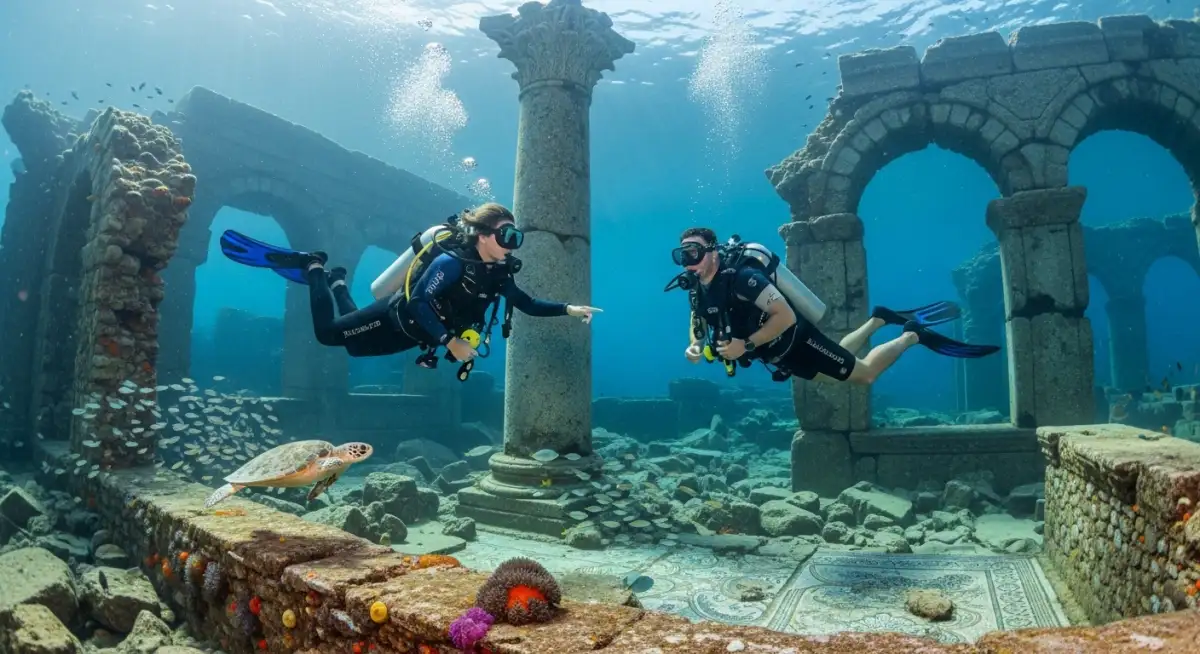
Kekova and other areas with archaeological remains need special care. Divers should not touch, move, collect or enter restricted heritage sites. Follow the guide, local authorities and site-specific rules; underwater cultural heritage should be observed without disturbing it.
How Much Does Gulet Diving Cost?
There is no reliable single price for a gulet diving trip. A quote may change with boat size, date, route, fuel, crew, port fees, meals, diving days, guide, cylinders, air or nitrox, equipment rental, transfers, permits, taxes and security deposit.
Ask for an itemised offer that separates the gulet charter from diving services. Confirm whether the price covers tanks, weights, fills, lead, masks, fins, wetsuits, dive computers, night dives, shore entries, instructor or guide services and emergency support.
Compare like-for-like packages rather than using an old per-person estimate. A lower headline price may exclude fuel, provisions, diving equipment, port charges or mandatory local services. Check cancellation, weather and route-change terms before paying a deposit.
What Makes a Turkish Gulet Suitable for Diving?
A gulet may suit diving when its deck, boarding point and storage can be used safely for the planned group. Traditional wooden construction and an outdoor dining area do not by themselves prove that a boat is configured for scuba operations.
Check the actual vessel's stability, swim platform, ladder, handholds, cylinder storage, compressor location, electrical supply, rinse tank, first-aid equipment and communication system. Ask who is responsible for the diving operation and who is responsible for navigation and vessel safety.
Do not assume that a Turkish gulet is safer or more comfortable than a boat from another country. Compare certified crew, diving procedures, equipment maintenance, emergency arrangements, passenger limits and insurance instead of relying on nationality-based claims.
Planning Safe Dives
No single arithmetic shortcut replaces recognised dive tables, a dive computer, training or a qualified guide. Plan depth, bottom time, surface intervals, gas supply and ascent procedures with the responsible dive professional, and follow the limits for the certification level and equipment in use.
Stay within your training and recent experience. Depth, overhead environments, wreck penetration, night diving, current, cold water and repetitive dives can require additional training or equipment. A route that looks suitable for a beginner on a map may not be suitable in the conditions on the day.
Dive with a buddy, complete a briefing, check equipment, agree communication and separation procedures, and identify the entry and exit plan. Do not dive if illness, medication, fatigue, alcohol, sea conditions or equipment problems make the plan unsuitable.
When to Plan a Gulet Diving Trip
Seasonal conditions vary across Turkey's coast. Water temperature, wind, waves, current, visibility and site access can change by region and day. Use historical season information only for initial planning and rely on the operator's current forecast and site assessment.
Ask whether the planned route includes sheltered alternatives. A captain or dive leader may cancel, shorten, relocate or postpone a dive when conditions, traffic, protection rules or diver readiness require it.
If you fly after diving, include a conservative surface interval in your travel plan. Divers Alert Network publishes guidance for flying after recreational dives; follow current medical and operator advice rather than scheduling a flight immediately after the final dive.
Planning Your Route
Departure ports such as Bodrum, Marmaris and Fethiye can lead to different Aegean or Mediterranean itineraries. Choose the port based on airport transfers, boat availability, requested sites, border or permit requirements and the time needed for the first and final dive.
A seven-day route is not a fixed product. The captain and dive leader should build the itinerary around weather, fuel, anchoring, safe navigation, site permissions, diver levels and the need for rest. A route may include non-diving days or shore activities.
Request the planned route in writing but expect responsible changes. A published list of bays or wrecks is not a guarantee that every site will be visited, and a longer route is not necessarily a better or safer route.
Matching Sites to Diving Levels
Beginner divers need an appropriate instructor or guide, a suitable site, controlled conditions and equipment that fits. An easy-looking site can become unsuitable because of current, wave action, limited visibility, boat traffic or a difficult exit.
Advanced sites can involve deeper profiles, walls, caves, wrecks, current or limited access. Confirm the required certification, minimum logged experience, equipment, gas plan, maximum depth and emergency procedure before accepting an advanced dive.
Gulet trips can work for mixed groups when the operator plans separate activities and does not force every guest into the same profile. Non-divers should have safe options while divers are underwater, and the boat's movement should not compromise the dive plan.
Marine Life and Responsible Observation
Depending on the region and conditions, divers may encounter groupers, sea bream, moray eels, octopus, rays, turtles or other Mediterranean species. Sightings are never guaranteed, and divers should avoid chasing, touching, feeding or surrounding wildlife.
Dolphins or other animals may appear near a boat, but encounters should remain incidental and respectful. Keep a safe distance, follow the crew's instructions and do not change the vessel's route or dive plan to pursue wildlife.
Good buoyancy and careful finning reduce contact with seabed habitats. Use established moorings where available, keep hoses and gauges controlled, take nothing from the sea and return all waste to shore.
Booking a Gulet Diving Trip
Choose an operator that can explain both the charter and diving sides of the trip. Ask for the responsible dive professional's qualification, the guide-to-diver ratio, insurance, emergency contacts, equipment service records and the limits of the operation.
Ask how the operator handles weather, illness, equipment failure, lost diver procedures, oxygen or first-aid access, evacuation, communication with shore services and the return to port. A professional answer should identify who decides whether a dive proceeds.
Book after checking the actual gulet, route, inclusions and contract. Peak dates may reduce availability, but a deposit should not be based only on promotional claims. Keep copies of certification requirements, medical forms, insurance terms and equipment reservations.
Safety Equipment and Training
For recreational dives, the relevant equipment and procedures depend on the operator, vessel, site and dive profile. Confirm correctly serviced cylinders, regulators, buoyancy equipment, exposure protection, weights, surface markers, communication, first aid and emergency oxygen where appropriate.
Türkiye's Ministry of Culture and Tourism explains that equipped-diving rules place responsibility for protecting cultural and natural wealth and diver life safety on the guide diver in the relevant circumstances, and that foreign divers should dive with a guide. Confirm the current rule and the guide arrangement with the authorised local operator.
IMO's 2023 Diving Code concerns diving units and systems, particularly professional or specialised operations; it should not be presented as a blanket certification for a recreational gulet. For a holiday dive, ask what national rules, operator procedures, certifications and vessel documents apply to the actual service.

Gulet and Day-Boat Diving Comparison
| Feature | Gulet charter | Day-boat or dive-centre trip |
|---|---|---|
| Accommodation | May include cabins; confirm the actual layout and occupancy | Usually returns to shore; overnight arrangements are separate |
| Diving platform | Layout, ladder and storage vary by boat | Designed for the operator's planned boarding and recovery process |
| Group size | Use the vessel and diving-service limits, not a generic range | Use the centre's stated passenger and diver limit |
| Site access | Can combine selected coastal sites with a longer charter route | Usually follows a daily schedule and local operating area |
| Equipment storage | Confirm secure cylinder, wet-gear and rinse arrangements | Confirm the centre's storage and rental-equipment process |
| Meals and surface intervals | May be arranged onboard; confirm menu, water and timing | May include a boat meal or shore-based arrangements |
| Cost | Quote varies with boat, route, crew and diving inclusions | Quote varies with dives, equipment, guide and transfers |
Diving Site Planning Guide
| Area or site type | What to check | Experience and equipment | Gulet planning note |
|---|---|---|---|
| Bodrum reefs and wrecks | Current, traffic, depth and site permission | Profile and certification must match the selected site | Confirm the departure point, anchoring and alternate site |
| Marmaris bays and caverns | Entry, exit, overhead restrictions and visibility | Do not enter caves or swim-throughs without specific training | Ask whether the boat can hold position without affecting divers |
| Fethiye reefs and walls | Protected-area rules, boat traffic and sea state | Use a guide and a surface marker where required | Keep route changes possible when wind or swell rises |
| Kekova and archaeological areas | Access restrictions and heritage-protection rules | Observe without touching, moving or collecting objects | Confirm the authorised guide and permitted viewing area |
| Advanced wall, cave or wreck dive | Maximum depth, gas, decompression and rescue plan | Use the required training, equipment and recent experience | Do not let a charter itinerary override the dive leader's limits |
What to Pack for Gulet Diving
Ask what rental gear is available and bring personal items that fit you well, such as a mask, exposure protection, dive computer or surface marker when appropriate. Confirm cylinder valves, weights, sizes, charging and storage before departure.
Use sunscreen responsibly and keep it away from the water where possible. Follow the operator's environmental instructions, avoid touching marine life and do not remove shells, ceramics, amphorae or other objects.
Pack a dry bag, spare prescription medication, sun protection, hydration supplies, seasickness treatment approved for you, identification and copies of certification or medical documents requested by the operator.
Most gulets provide some towels and basic amenities, but this is boat-specific. Confirm power sockets, charging, fresh water, laundry, luggage limits and whether wet equipment can remain on deck between dives.
References
- Republic of Türkiye Ministry of Culture and Tourism – "Equipped Diving Rules" https://www.ktb.gov.tr/EN-99430/equipped-diving-rules.html – Official guidance on guide divers, cultural and natural heritage, and diver life safety.
- GoTürkiye – "Diving in Turkiye Travel Guide" https://goturkiye.com/outdoor-and-nature/diving – Official destination overview of boat dives, wrecks, caves and wall dives.
- GoTürkiye – "Aegean Diving" https://goturkiye.com/diving/aegean – Official regional context for Bodrum, Marmaris, Fethiye and other Aegean areas.
- UNESCO – "Underwater Cultural Heritage 2001 Convention" https://www.unesco.org/en/underwater-heritage – Protection and sustainability principles for submerged cultural heritage.
- Divers Alert Network – "Guidelines for Flying After Diving" https://dan.org/health-medicine/health-resource/health-safety-guidelines/guidelines-for-flying-after-diving/ – Guidance for planning air travel after recreational diving.
- International Maritime Organization – "International Code of Safety for Diving Operations, 2023" https://wwwcdn.imo.org/localresources/en/KnowledgeCentre/IndexofIMOResolutions/MSCResolutions/MSC.548(107).pdf – International safety framework for applicable diving units and systems.
- Türkiye Underwater Sports Federation – "Turkiye Underwater Sports Federations" https://www.tssf.gov.tr/ – National federation context for underwater sports, training and notices.
- Republic of Türkiye Ministry of Transport and Infrastructure, Directorate General for Maritime Affairs – "What We Do" https://maritime.uab.gov.tr/what-we-do – Maritime permissions, inspections, safety conditions and operator oversight context.
This article was last updated on August 11, 2026.
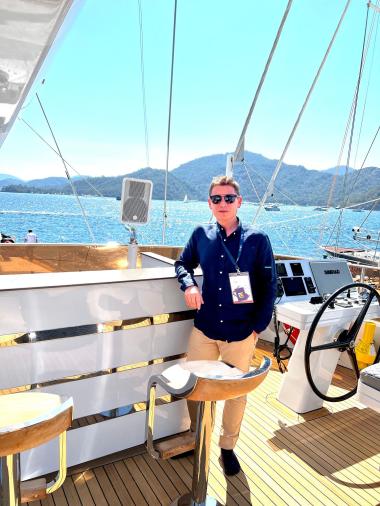
I have over ten years of experience in luxury yacht charters. I focus on creating amazing sailing experiences along the Turkish Riviera. As the CEO of De Yachting since 2010, I have managed many successful charters. I know Turkey's most beautiful coastal spots very well.
Areas of Expertise
Have questions about yacht chartering?
Feel free to reach out directly